Categories
Publications

Covid-19: Researcher blows the whistle on data integrity issues in Pfizer’s vaccine trial – BMJ

Revelations of poor practices at a contract research company helping to carry out Pfizer’s pivotal covid-19 vaccine trial raise questions about data integrity and regulatory oversight. Paul D Thacker reports

In autumn 2020 Pfizer’s chairman and chief executive, Albert Bourla, released an open letter to the billions of people around the world who were investing their hopes in a safe and effective covid-19 vaccine to end the pandemic. “As I’ve said before, we are operating at the speed of science,” Bourla wrote, explaining to the public when they could expect a Pfizer vaccine to be authorised in the United States.1

But, for researchers who were testing Pfizer’s vaccine at several sites in Texas during that autumn, speed may have come at the cost of data integrity and patient safety. A regional director who was employed at the research organisation Ventavia Research Group has told The BMJ that the company falsified data, unblinded patients, employed inadequately trained vaccinators, and was slow to follow up on adverse events reported in Pfizer’s pivotal phase III trial. Staff who conducted quality control checks were overwhelmed by the volume of problems they were finding. After repeatedly notifying Ventavia of these problems, the regional director, Brook Jackson, emailed a complaint to the US Food and Drug Administration (FDA). Ventavia fired her later the same day. Jackson has provided The BMJ with dozens of internal company documents, photos, audio recordings, and emails.

Poor laboratory management
On its website Ventavia calls itself the largest privately owned clinical research company in Texas and lists many awards it has won for its contract work.2 But Jackson has told The BMJ that, during the two weeks she was employed at Ventavia in September 2020, she repeatedly informed her superiors of poor laboratory management, patient safety concerns, and data integrity issues. Jackson was a trained clinical trial auditor who previously held a director of operations position and came to Ventavia with more than 15 years’ experience in clinical research coordination and management. Exasperated that Ventavia was not dealing with the problems, Jackson documented several matters late one night, taking photos on her mobile phone. One photo, provided to The BMJ, showed needles discarded in a plastic biohazard bag instead of a sharps container box. Another showed vaccine packaging materials with trial participants’ identification numbers written on them left out in the open, potentially unblinding participants. Ventavia executives later questioned Jackson for taking the photos.

Early and inadvertent unblinding may have occurred on a far wider scale. According to the trial’s design, unblinded staff were responsible for preparing and administering the study drug (Pfizer’s vaccine or a placebo). This was to be done to preserve the blinding of trial participants and all other site staff, including the principal investigator. However, at Ventavia, Jackson told The BMJ that drug assignment confirmation printouts were being left in participants’ charts, accessible to blinded personnel. As a corrective action taken in September, two months into trial recruitment and with around 1000 participants already enrolled, quality assurance checklists were updated with instructions for staff to remove drug assignments from charts.

In a recording of a meeting in late September2020 between Jackson and two directors a Ventavia executive can be heard explaining that the company wasn’t able to quantify the types and number of errors they were finding when examining the trial paperwork for quality control. “In my mind, it’s something new every day,” a Ventavia executive says. “We know that it’s significant.”

Ventavia was not keeping up with data entry queries, shows an email sent by ICON, the contract research organisation with which Pfizer partnered on the trial. ICON reminded Ventavia in a September 2021 email: “The expectation for this study is that all queries are addressed within 24hrs.” ICON then highlighted over 100 outstanding queries older than three days in yellow. Examples included two individuals for which “Subject has reported with Severe symptoms/reactions … Per protocol, subjects experiencing Grade 3 local reactions should be contacted. Please confirm if an UNPLANNED CONTACT was made and update the corresponding form as appropriate.” According to the trial protocol a telephone contact should have occurred “to ascertain further details and determine whether a site visit is clinically indicated.”

Worries over FDA inspection
Documents show that problems had been going on for weeks. In a list of “action items” circulated among Ventavia leaders in early August 2020, shortly after the trial began and before Jackson’s hiring, a Ventavia executive identified three site staff members with whom to “Go over e-diary issue/falsifying data, etc.” One of them was “verbally counseled for changing data and not noting late entry,” a note indicates. At several points during the late September meeting Jackson and the Ventavia executives discussed the possibility of the FDA showing up for an inspection (box 1). “We’re going to get some kind of letter of information at least, when the FDA gets here . . . know it,” an executive stated.

Box 1
A history of lax oversight
When it comes to the FDA and clinical trials, Elizabeth Woeckner, president of Citizens for Responsible Care and Research Incorporated (CIRCARE),3 says the agency’s oversight capacity is severely under-resourced. If the FDA receives a complaint about a clinical trial, she says the agency rarely has the staff available to show up and inspect. And sometimes oversight occurs too late.

In one example CIRCARE and the US consumer advocacy organisation Public Citizen, along with dozens of public health experts, filed a detailed complaint in July 2018 with the FDA about a clinical trial that failed to comply with regulations for the protection of human participants.4 Nine months later, in April 2019, an FDA investigator inspected the clinical site. In May this year the FDA sent the triallist a warning letter that substantiated many of the claims in the complaints. It said, “[I]t appears that you did not adhere to the applicable statutory requirements and FDA regulations governing the conduct of clinical investigations and the protection of human subjects.”5

“There’s just a complete lack of oversight of contract research organisations and independent clinical research facilities,” says Jill Fisher, professor of social medicine at the University of North Carolina School of Medicine and author of Medical Research for Hire: The Political Economy of Pharmaceutical Clinical Trials.

Ventavia and the FDA
A former Ventavia employee told The BMJ that the company was nervous and expecting a federal audit of its Pfizer vaccine trial.

“People working in clinical research are terrified of FDA audits,” Jill Fisher told The BMJ, but added that the agency rarely does anything other than inspect paperwork, usually months after a trial has ended. “I don’t know why they’re so afraid of them,” she said. But she said she was surprised that the agency failed to inspect Ventavia after an employee had filed a complaint. “You would think if there’s a specific and credible complaint that they would have to investigate that,” Fisher said.

In 2007 the Department of Health and Human Services’ Office of the Inspector General released a report on FDA’s oversight of clinical trials conducted between 2000 and 2005. The report found that the FDA inspected only 1% of clinical trial sites.6 Inspections carried out by the FDA’s vaccines and biologics branch have been decreasing in recent years, with just 50 conducted in the 2020 fiscal year.7


The next morning, 25 September 2020, Jackson called the FDA to warn about unsound practices in Pfizer’s clinical trial at Ventavia. She then reported her concerns in an email to the agency. In the afternoon Ventavia fired Jackson—deemed “not a good fit,” according to her separation letter.

Jackson told The BMJ it was the first time she had been fired in her 20 year career in research.

Concerns raised
In her 25 September email to the FDA Jackson wrote that Ventavia had enrolled more than 1000 participants at three sites. The full trial (registered under NCT04368728) enrolled around 44 000 participants across 153 sites that included numerous commercial companies and academic centres. She then listed a dozen concerns she had witnessed, including:
-Participants placed in a hallway after injection and not being monitored by clinical staff
-Lack of timely follow-up of patients who experienced adverse events
-Protocol deviations not being reported
-Vaccines not being stored at proper temperatures
-Mislabelled laboratory specimens, and
-Targeting of Ventavia staff for reporting these types of problems.
Within hours Jackson received an email from the FDA thanking her for her concerns and notifying her that the FDA could not comment on any investigation that might result. A few days later Jackson received a call from an FDA inspector to discuss her report but was told that no further information could be provided. She heard nothing further in relation to her report.

In Pfizer’s briefing document submitted to an FDA advisory committee meeting held on 10 December 2020 to discuss Pfizer’s application for emergency use authorisation of its covid-19 vaccine, the company made no mention of problems at the Ventavia site. The next day the FDA issued the authorisation of the vaccine.8

In August this year, after the full approval of Pfizer’s vaccine, the FDA published a summary of its inspections of the company’s pivotal trial. Nine of the trial’s 153 sites were inspected. Ventavia’s sites were not listed among the nine, and no inspections of sites where adults were recruited took place in the eight months after the December 2020 emergency authorisation. The FDA’s inspection officer noted: “The data integrity and verification portion of the BIMO [bioresearch monitoring] inspections were limited because the study was ongoing, and the data required for verification and comparison were not yet available to the IND [investigational new drug].”

Other employees’ accounts
In recent months Jackson has reconnected with several former Ventavia employees who all left or were fired from the company. One of them was one of the officials who had taken part in the late September meeting. In a text message sent in June the former official apologised, saying that “everything that you complained about was spot on.”

Two former Ventavia employees spoke to The BMJ anonymously for fear of reprisal and loss of job prospects in the tightly knit research community. Both confirmed broad aspects of Jackson’s complaint. One said that she had worked on over four dozen clinical trials in her career, including many large trials, but had never experienced such a “helter skelter” work environment as with Ventavia on Pfizer’s trial.

“I’ve never had to do what they were asking me to do, ever,” she told The BMJ. “It just seemed like something a little different from normal—the things that were allowed and expected.”

She added that during her time at Ventavia the company expected a federal audit but that this never came.

After Jackson left the company problems persisted at Ventavia, this employee said. In several cases Ventavia lacked enough employees to swab all trial participants who reported covid-like symptoms, to test for infection. Laboratory confirmed symptomatic covid-19 was the trial’s primary endpoint, the employee noted. (An FDA review memorandum released in August this year states that across the full trial swabs were not taken from 477 people with suspected cases of symptomatic covid-19.)

“I don’t think it was good clean data,” the employee said of the data Ventavia generated for the Pfizer trial. “It’s a crazy mess.”

A second employee also described an environment at Ventavia unlike any she had experienced in her 20 years doing research. She told The BMJ that, shortly after Ventavia fired Jackson, Pfizer was notified of problems at Ventavia with the vaccine trial and that an audit took place.

Since Jackson reported problems with Ventavia to the FDA in September 2020, Pfizer has hired Ventavia as a research subcontractor on four other vaccine clinical trials (covid-19 vaccine in children and young adults, pregnant women, and a booster dose, as well an RSV vaccine trial; NCT04816643, NCT04754594, NCT04955626, NCT05035212). The advisory committee for the Centers for Disease Control and Prevention is set to discuss the covid-19 paediatric vaccine trial on 2 November.

Footnotes
Provenance and peer review: commissioned; externally peer reviewed.

Competing interests: PDT has been doubly vaccinated with Pfizer’s vaccine.

This article is made freely available for use in accordance with BMJ’s website terms and conditions for the duration of the covid-19 pandemic or until otherwise determined by BMJ. You may use, download and print the article for any lawful, non-commercial purpose (including text and data mining) provided that all copyright notices and trade marks are retained.

https://bmj.com/coronavirus/usage

References
* Bourla A. An open letter from Pfizer chairman and CEO Albert Bourla. Pfizer. https://www.pfizer.com/news/hot-topics/an_open_letter_from_pfizer_chairman_and_ceo_albert_bourla.
* Ventavia. A leading force in clinical research trials. https://www.ventaviaresearch.com/company.
* Citizens for Responsible Care and Research Incorporated (CIRCARE). http://www.circare.org/corp.htm.
* Public Citizen. Letter to Scott Gottlieb and Jerry Menikoff. Jul 2018. https://www.citizen.org/wp-content/uploads/2442.pdf.
↵Food and Drug Administration. Letter to John B Cole MD. MARCS-CMS 611902. May 2021. https://www.fda.gov/inspections-compliance-enforcement-and-criminal-investigations/warning-letters/jon-b-cole-md-611902-05052021.
* Department of Health and Human Services Office of Inspector General. The Food and Drug Administration’s oversight of clinical trials. Sep 2007. https://www.oig.hhs.gov/oei/reports/oei-01-06-00160.pdf.
* Food and Drug Administration. Bioresearch monitoring. https://www.fda.gov/media/145858/download.
* FDA takes key action in fight against covid-19 by issuing emergency use authorization for first covid-19 vaccine. Dec 2020. https://www.fda.gov/news-events/press-announcements/fda-takes-key-action-fight-against-covid-19-issuing-emergency-use-authorization-first-covid-19.

Original article: https://www.bmj.com/content/375/bmj.n2635

Archive mirrors:

Categories
News

Johnson & Johnson COVID Vaccine Recipients Almost 4X as Likely to Get Blood Clots: Study – Newsweek

A new study conducted in one county in Minnesota has found an increased likelihood that citizens who received the Johnson & Johnson’s COVID-19 vaccine were more likely to develop blood clots.

The study by the Mayo Clinic found that recipients of the Johnson & Johnson vaccine, officially designated “Janssen,” in Olmsted County, Minnesota, were about 3.7 times more likely to develop a certain variety of cerebral blood clots. Case numbers taken from February 28 to May 7, 2021, were compared to pre-pandemic levels of the blood clots from January 1, 2001, through December 31, 2015.

http://archive.today/2021.11.03-081828/https://www.newsweek.com/johnson-johnson-covid-vaccine-recipients-almost-4x-likely-get-blood-clots-study-1645100

Categories
News

Tributes to schoolgirl, 12, who died suddenly from brain haemorrhage – The Express

TRIBUTES have poured in for a 12-year-old girl who has died suddenly after suffering with a brain haemorrhage.

http://archive.today/2021.11.03-132137/https://www.express.co.uk/news/uk/1514930/gemma-caffrey-tributes-schoolgirl-died-brain-haemorrhage-headteacher

Categories
Publications

Age- and Sex-Specific Incidence of Cerebral Venous Sinus Thrombosis Associated With Ad26.COV2.S COVID-19 Vaccination JAMA

In this population-based cohort study, we found that the CVST incidence rate 15 days after Ad26.COV2.S vaccination was significantly higher than the prepandemic rate. However, the higher rate of this rare adverse effect must be considered in the context of the effectiveness of the vaccine in preventing COVID-19 (absolute reduction of severe or critical COVID-19 of 940 per 100 000 PY).

http://archive.today/2021.11.02-171706/https://jamanetwork.com/journals/jamainternalmedicine/fullarticle/2785610

Categories
News

What is the Number Needed to Vaccinate (NNTV) to prevent a single COVID-19 fatality in kids 5 to 11 based on the Pfizer EUA application? Toby Rogers, Ph.D.

An article by Toby Rogers, Ph.D.

I was reading the CDC’s “Guidance for Health Economics Studies Presented to the Advisory Committee on Immunization Practices (ACIP), 2019 Update” and I realized that the FDA’s woeful risk-benefit analysis in connection with Pfizer’s EUA application to jab children ages 5 to 11 violates many of the principles of the CDC’s Guidance document. The CDC “Guidance” document describes 21 things that every health economics study in connection with vaccines must do and the FDA risk-benefit analysis violated at least half of them.

Today I want to focus on a single factor: the Number Needed to Vaccinate (NNTV). In four separate places the CDC Guidance document mentions the importance of coming up with a Number Needed to Vaccinate (NNTV). I did not recall seeing an NNTV in the FDA risk-benefit document. So I checked the FDA’s risk-benefit analysis again and sure enough, there was no mention of an NNTV.

http://archive.today/2021.11.01-110110/https://tobyrogers.substack.com/p/what-is-the-number-needed-to-vaccinate

Categories
News

School closures ‘did not significantly reduce Covid spread’ – The Telegraph

There is “no evidence” that school closures significantly reduced the spread of Covid, a study has found.

The research, published in the journal Nature Medicine, used data from Japan, where each municipality is responsible for the closure of schools in their areas.

…”Empirically, we find no evidence that school closures in Japan caused a significant reduction in the number of coronavirus cases,” they said.

“If opening schools leads to the spread of Covid-19, spikes of cases would occur in the control group; however, these were not observed. The implication is the same: school closures do not help reduce the spread of Covid-19 significantly.”

…Separate research, published earlier this year, found the UK had closed schools for longer than anywhere in Europe other than Italy over the past 18 months.

http://archive.today/2021.11.01-222952/https://www.telegraph.co.uk/news/2021/11/01/school-closures-did-not-significantly-reduce-covid-spread/

Categories
News

Lockdown fanatics should be ashamed of themselves – The Telegraph

These prognosticators of doom have been wrong time after time after time. And not just a little bit wrong – epically wrong, all while morally condemning their more accurate opponents. As cases rose in early July, in the run-up to England’s full reopening on July 19, restrictions advocates said that it was inevitable we would reach 100,000 cases per day. Keir Starmer released a video statement in which he declared that “Boris Johnson’s recklessness means we’re going to have an NHS summer crisis. The Johnson Variant is already out of control.” A set of academics wrote a letter to The Lancet condemning the reopening as a “dangerous and unethical experiment”.

http://archive.today/2021.10.30-062600/https://www.telegraph.co.uk/news/2021/10/29/lockdown-fanatics-should-ashamed/

Categories
News

Common 29p drug ‘cuts Covid hospitalisation risk by a third’ – Birmingham Mail

A common drug slashes your risk of hospitalisation after Covid by as much as a third.

An antidepressant costing just 29p was given to half in a new study, with the other participants getting a placebo.

The study took place in Brazil, in South America, and its research has now been published in the Lancet.

…Fluvoxamine is branded as Faverin in the UK, and was found to reduce the hospital risk by 32 per cent in Covid sufferers.

Edward Mills, a researcher at McMaster University, Canada, which co-led the study, said: “Fluvoxamine is, so far, the only treatment that if administered early, can prevent Covid-19 from becoming a life-threatening illness.

http://archive.today/2021.10.28-162408/https://www.birminghammail.co.uk/news/midlands-news/common-29p-drug-cuts-covid-21995345

Categories
News

Student found dead at university’s halls of residence – The Express

A STUDENT has been found dead at a university halls of residence.

Emergency services dashed to Trinity View, privately owned accommodation, in Coventry city centre to reports of a responseless 19-year-old man. He was pronounced dead at the scene and police are not treating it as suspicious.

http://archive.today/2021.11.03-132242/https://www.express.co.uk/news/uk/1512198/Coventry-University-student-dead-accommodation-Trinity-View

Categories
News

I Have Been Through This Before – Ann Bauer

Don’t wear a mask; you must wear a mask. Buy a pulse oximeter. Stock up on Tylenol, vitamin D, Pepcid. Whisper so you don’t spit. Stand six feet from others—no, 10. Wear gloves. Wear two masks! Open the windows. Close the schools. The dizzying madness of COVID, and the reliance on gurulike experts, has been eerily familiar.

http://archive.today/2021.10.27-141347/https://www.tabletmag.com/sections/arts-letters/articles/i-have-been-through-this-before-bauer

Categories
Videos

Dr. Peter McCullough presentation in Phoenix AZ – Association of American Physicians and Surgeons

Dr. McCullough speaks about vaccine safety, efficacy, and the continued need for early treatment.

Categories
Opinion

Experts warn UK against ‘blindly’ following US in jabbing healthy five-year-olds against Covid because the reasons are ‘scientifically weak’ — as FDA panel approves Pfizer’s vaccine for primary school-aged children – Daily Mail

Arguments to vaccinate children as young as five against Covid are ‘scientifically weak’, British experts claimed today after the US moved closer to jabbing infants.

…Professor David Livermore, a medical microbiologist at the University of East Anglia told MailOnline: ‘Vaccinating children to protect adults via herd immunity is ethically dubious and is scientifically weak.’

…Professor Russell Viner, a pediatrician and member of the UK Government’s scientific advisory group SAGE, said it was crucial the UK does not ‘rush to a decision’ in the wake of the announcement in the US. 

http://archive.today/2021.10.27-181525/https://www.dailymail.co.uk/news/article-10135699/Experts-urge-UK-steer-clear-vaccinating-children-moves-closer-jabbing-FIVE-year-olds.html

Categories
News

EXCLUSIVE: Boozy cocktail party with STRING QUARTET for bosses whose consultancy firm pocketed £28 million in Test and Trace cash – as it is revealed under-fire £37bn service still has nearly 2,000 consultants paid up to £6,600 A DAY – Daily Mail

Boston Consulting Group – paid £28million – held a boozy party this month

Images of the lavish bash showed scores of cocktails and string quartet

Unfortunate timing meant two weeks later the spend on the company was slated

Public Accounts Committee said NHS Test and Trace system failed objective

It said it had not ‘broken chains of COVID-19 transmission’ as it had intended

The PAC said it was ‘overly reliant on expensive contractors and temporary staff’

BCG declined to comment when contacted by MailOnline over the party

Lord John Mann said they should ‘hang heads in shame’ and give money back

http://archive.today/2021.10.28-121707/https://www.dailymail.co.uk/news/article-10136179/Boozy-party-STRING-QUARTET-bosses-firm-pocketed-28m-Test-Trace-cash.html

Categories
Opinion

SAGE models need a reality check – Dr. Clare Craig, Reaction

Why haven’t lockdowns worked? There are broadly two types of respiratory virus. There are those that spread person to person – like measles – in a continuous chain of transmission, uninterrupted by season and with every susceptible contact falling ill. Then there are those we do not understand so well, like influenza, which are much more complex. Instead of the simplistic close contact model, which assumes Covid spreads like measles, we should perhaps consider an alternative more sophisticated model based on influenza. The influenza virus model is unusual – it is predicated on the majority being exposed to a particular airborne virus but, oddly, only a minority appear to be susceptible to each year’s variant. To complicate matters further, influenza can also spread person to person.

https://reaction.life/sage-models-need-a-reality-check/

Categories
Videos

COVID Long Haulers follow-up with Dr. Al Johnson and Dr. Peter McCullough – Johnson Medical Associates

Dr. Al Johnson is back with Dr. Peter McCullough to discuss the problem with long COVID as well as vaccine reactions.

Categories
News

Mum, 28, dies suddenly while running a bath after dropping son off at school – The Mirror

A young mum died after collapsing while running a bath for herself, with her partner coming home to find the house flooded and the woman hospitalised.

Following a further medical investigation over the past month, the cause of death was listed as Sudden Arrhythmic Death Syndrome.

Sudden arrhythmic death syndrome is when someone dies suddenly and unexpectedly from a cardiac arrest, but the cause of the cardiac arrest can’t be found.

http://archive.today/2021.11.08-125327/https://www.mirror.co.uk/news/uk-news/mum-28-dies-suddenly-running-25298472

Categories
News

NATO Plans AI Strategy, $1B Investment Fund as it Seeks to Stay Ahead in Tech Realm – Military.com

NATO will adopt its first strategy on artificial intelligence and launch an innovation fund this week with the aim of investing $1 billion to “futureproof” the 30-nation security pact, Secretary-General Jens Stoltenberg said Wednesday.

…Stoltenberg said he expects the new NATO fund to invest in emerging and disruptive technologies. New headquarters and test centers will be set up in both Europe and North America to support the effort, he said.

http://archive.today/2021.10.23-040307/https://www.military.com/daily-news/2021/10/21/nato-plans-ai-strategy-1b-investment-fund-it-seeks-stay-ahead-tech-realm.html

Categories
Publications

Cognitive Warfare – The Innovation Hub

Published November 2020

As global conflicts take on increasingly asymmetric and “grey” forms, the ability to manipulate the human mind employing neurocognitive science techniques and tools is constantly and quickly increasing. This complements the more traditional techniques of manipulation through information technology and information warfare, making the human increasingly targeted in the cognitive warfare. 

Any user of modern information technologies is a potential target. It targets the whole of a nation’s human capital.

Cognitive Warfare, June-November 2020, p. 6

Original: https://www.innovationhub-act.org/sites/default/files/2021-01/20210122_CW%20Final.pdf

Archive: http://archive.today/2021.10.21-043819/https://www.innovationhub-act.org/sites/default/files/2021-01/20210122_CW%20Final.pdf

Categories
News

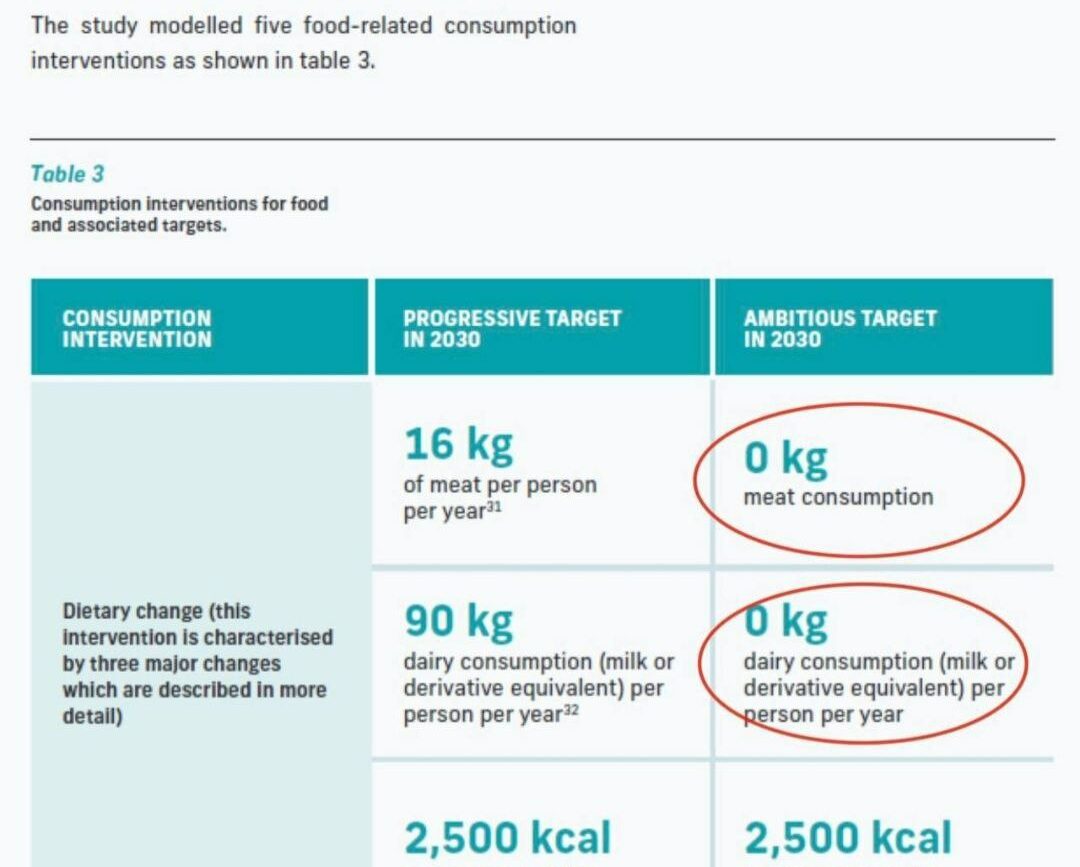
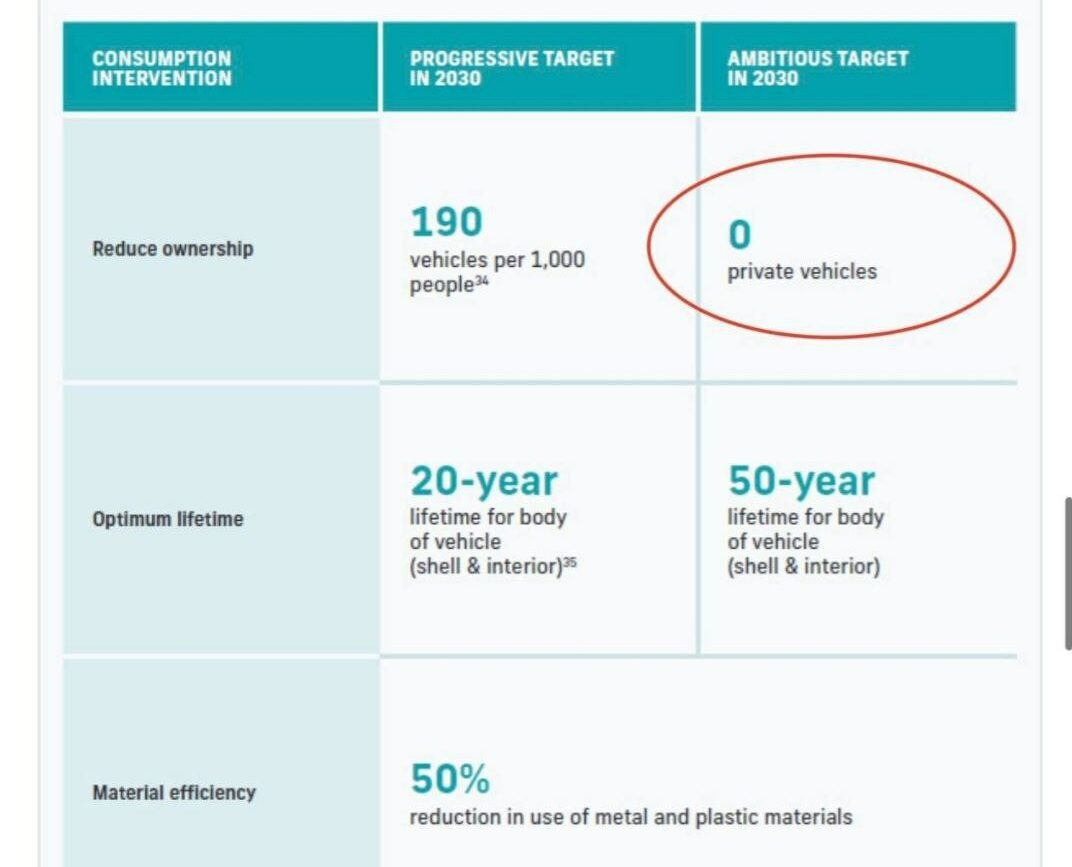
Climate plan urging plant-based diet shift deleted – BBC News

A government research paper recommending people “shift dietary habits” towards plant-based foods has been hastily deleted.

The paper focuses on changing public behaviour to hit climate targets and also suggests promoting domestic tourism and portraying business travel as an “immoral indulgence”.

…In a chapter in the deleted document titled “Applications to Net Zero Policy”, under the subheading “Diet Changes”, researchers recommend following the example of the sugar levy with a tax on producers or retailers of “high-carbon foods” to incentivise “reformulation and diversification” towards more plant-based and local food types.

http://archive.today/2021.10.20-142900/https://www.bbc.com/news/business-58981505

Categories
News

NHS cash being spent on football season tickets, beach huts and theme park trips – The telegraph

NHS cash is being spent on football season tickets, National Trust memberships and renting beach huts, an investigation has revealed.

Restaurant meals, Amazon Prime membership, PlayStation consoles and theme park passes have also been funded under the health service system of “personal budgets”.

http://archive.today/2021.10.21-112621/https://www.telegraph.co.uk/news/2021/10/21/nhs-cash-spent-football-season-tickets-beach-huts-theme-park/