The CDC did not include its finding that “required mask use among students was not statistically significant compared with schools where mask use was optional” in the summary of its report.
Charts
Browse the articles related to this topic below.
Join our community on Guilded.
Excess deaths have not been this high since the week ending Feb 19, when 2,182 extra deaths were registered – 18.8 per cent above the pre-2020 five-year average.
Although some of the increase in excess deaths can be explained by the recent rise in deaths involving Covid, most were not linked to the virus.
Kevin McConway, emeritus professor of applied statistics at The Open University, said: “These excess deaths can’t all be explained by deaths of people who had Covid-19. In the most recent week, for England and Wales there were 1,270 more deaths than the five-year average – that’s 14 per cent higher than that average.
…Deaths in private homes have been well above the 2015-19 average almost every week since April last year. Before Covid, around a quarter of deaths occurred at home but that has since risen to one third, according to research by the King’s Fund.
Categories
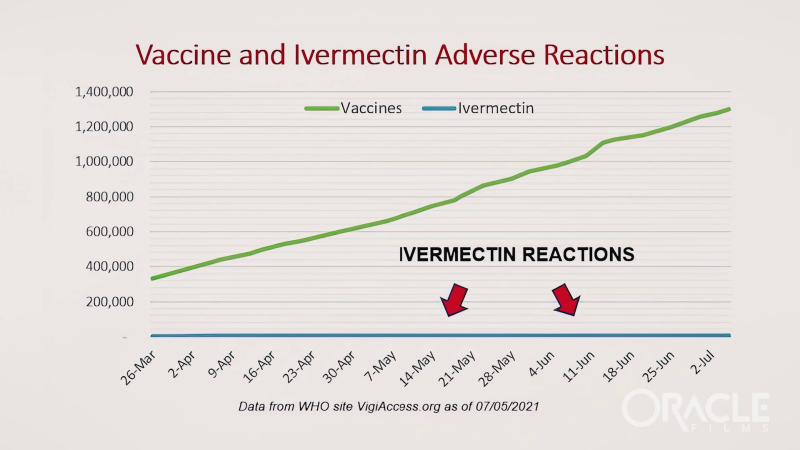
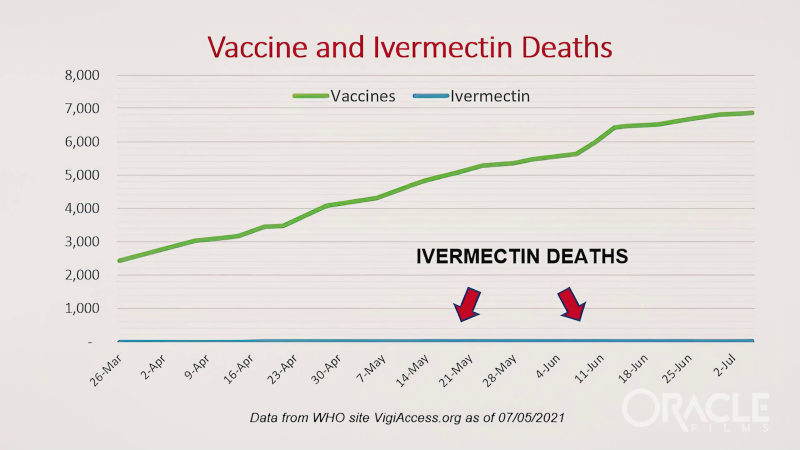
Dr. Tess Lawrie Interview – Oracle Films
Dr. Tess Lawrie is a world-class researcher and consultant to the World Health Organisation. Her biggest clients happen to be those who are involved in the suppression of repurposed drugs. She has decided to speak out in protest against the current medical establishment at considerable personal risk.
She co-founded the BiRD Group; an international consortium of experts dedicated to the transparent and accurate scientific research of Ivermectin, with particular emphasis on the treatment and prevention of Covid-19.
People with a PhD are the most hesitant when it comes to getting the Covid-19 vaccine, according to a paper by researchers from Carnegie Mellon University and the University of Pittsburgh.
Researchers surveyed just over five million US adults in an online survey, with 10,000 reporting that they were educated to PhD level.
The report showed a surprising U-shaped correlation between willingness to get a Covid vaccine and education level – with the highest hesitancy among those least and most educated.

More than half of Covid hospitalisations are patients who only tested positive after admission, leaked data reveal.
The figures suggest vast numbers are being classed as hospitalised by Covid when they were admitted with other ailments, with the virus picked up by routine testing.
Experts said it meant the national statistics, published daily on the government website and frequently referred to by ministers, may far overstate the levels of pressures on the NHS.
The leaked data – covering all NHS trusts in England – show that, as of last Thursday, just 44 per cent of patients classed as being hospitalised with Covid had tested positive by the time they were admitted.
…Prof Carl Heneghan, director of the Centre for Evidence-Based Medicine at the University of Oxford, said: “This data is incredibly important, and it should be published on an ongoing basis.
“When people hear about hospitalisations with Covid, they will assume that Covid is the likely cause, but this data shows something quite different – this is about Covid being detected after tests were looking for it.”
The kids are safe. They always have been.
It may sound strange, given a year of panic over school closures and reopenings, a year of masking toddlers and closing playgrounds and huddling in pandemic pods, that among children the mortality risk from COVID-19 is actually lower than from the flu. The risk of severe disease or hospitalization is about the same.
This is true for the much-worried-over Delta variant. It is also true for all the other variants, and for the original strain. Most remarkably, it has been known to be true since the very earliest days of the pandemic — indeed it was among the very first things we did know about the disease. The preliminary mortality data from China was very clear: To children, COVID-19 represented only a vanishingly tiny threat of death, hospitalization, or severe disease.
Yet for a year and a half we have been largely unwilling to fully believe it. Children now wear masks at little-league games, and at the swimming pool, and when school reopens in the fall they will likely wear masks there, too. But the kids are not at risk themselves, and never were. Now, thanks to vaccines, the vast majority of their parents and grandparents aren’t any longer, either.
https://nymag.com/intelligencer/2021/07/the-kids-were-safe-from-covid-the-whole-time.html
The overall risk of children becoming severely ill or dying from Covid is extremely low, a new analysis of Covid infection data confirms.
Scientists from University College London, and the Universities of York, Bristol and Liverpool say their studies of children are the most comprehensive yet anywhere in the world.
They checked England’s public health data and found most of the young people who had died of Covid-19 had underlying health conditions:Around 15 had life-limiting or underlying conditions, including 13 living with complex neuro-disabilities
Six had no underlying conditions recorded in the last five years – though researchers caution some illnesses may have been missed
A further 36 children had a positive Covid test at the time of their death but died from other causes, the analysis suggests
Though the overall risks were still low, children and young people who died were more likely to be over the age of 10 and of Black and Asian ethnicity.
Researchers estimate that 25 deaths in a population of some 12 million children in England gives a broad, overall mortality rate of 2 per million children.
25 CYP died of SARS-CoV-2 during the first pandemic year in England, equivalent to an infection fatality rate of 5 per 100,000 and a mortality rate of 2 per million. Most had an underlying comorbidity, particularly neurodisability and life-limiting conditions. The CYP who died were mainly >10 years and of Asian and Black ethnicity, compared to other causes of the death, but their absolute risk of death was still extremely low.
Introduction
Severe COVID-19 illness in adults has been linked to underlying medical conditions. This study identified frequent underlying conditions and their attributable risk of severe COVID-19 illness.Conclusion
Certain underlying conditions and the number of conditions were associated with severe COVID-19 illness. Hypertension and disorders of lipid metabolism were the most frequent, whereas obesity, diabetes with complication, and anxiety disorders were the strongest risk factors for severe COVID-19 illness. Careful evaluation and management of underlying conditions among patients with COVID-19 can help stratify risk for severe illness.
http://archive.today/2021.10.25-144944/https://www.cdc.gov/pcd/issues/2021/21_0123.htm
Many governments have made nose and mouth covering or face masks compulsory for schoolchildren. The evidence base for this is weak. The question whether nose and mouth covering increases carbon dioxide in inhaled air is crucial. A large-scale survey in Germany of adverse effects in parents and children using data of 25 930 children has shown that 68% of the participating children had problems when wearing nose and mouth coverings.
The normal content of carbon dioxide in the open is about 0.04% by volume (ie, 400 ppm). A level of 0.2% by volume or 2000 ppm is the limit for closed rooms according to the German Federal Environmental Office, and everything beyond this level is unacceptable.
https://jamanetwork.com/journals/jamapediatrics/fullarticle/2781743
Admissions have failed to sky-rocket – and it’s time ministers took their own advice about learning to live with the virus
The number of people dying with flu and pneumonia on their death certificate in England and Wales is now 10 times higher than those with Covid, figures show.
The latest weekly data on deaths from the Office for National Statistics (ONS) show that there were 84 deaths mentioning Covid in the week ending June 11. There were 1,163 involving flu and pneumonia.
Registered Covid deaths fell by 14 per cent since the last update, in the week ending June 4, when 98 deaths were recorded.
Covid deaths now make up just 0.8 per cent of all deaths – down from 1.3 per cent in the previous week, despite the fact that week included the late May bank holiday, meaning there were fewer death registrations.
…The figures are much lower than would usually be expected for respiratory disease at this time of year. The five-year average for deaths involving flu and pneumonia in the same week is 1,704.
https://www.telegraph.co.uk/news/2021/06/22/flu-pneumonia-deaths-now-ten-times-higher-covid/
Categories
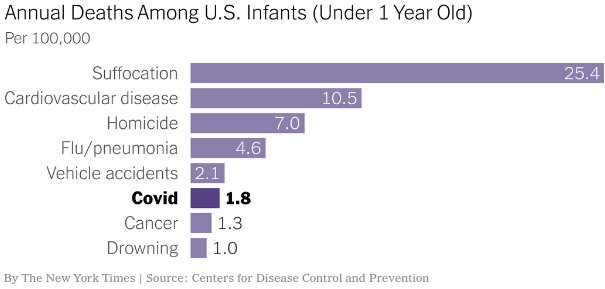
Kids, Covid and Delta – The New York Times
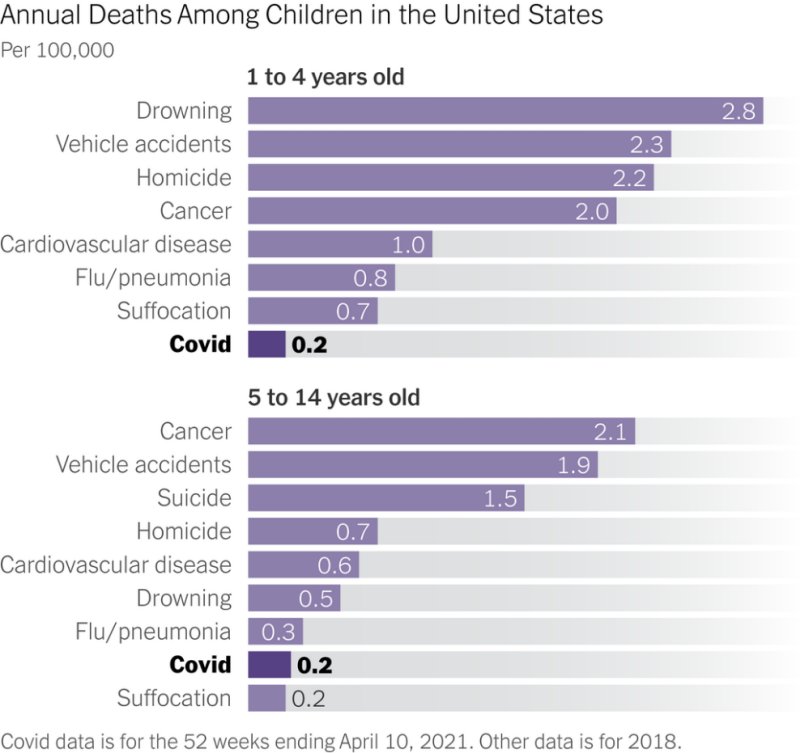
This evidence suggests that serious versions of Covid will continue to be extremely rare in children.
As you can see here, some common activities — and several other diseases — have caused significantly more childhood deaths than Covid has:
The by now all-too-familiar vertiginous lines were intended to leave the public in no doubt about the consequences of not delaying freedom until July 19.
But take a closer look and the choice of graphs is arguably disingenuous: the slides are most revealing for what they failed to include.

https://www.telegraph.co.uk/news/2021/06/15/fear-freedom-doom-laded-government-graphs-dont-show-us/
Hospital admissions [in England] were down by 6.7 million (39%) on the year before, when we didn’t have a deadly pandemic.

Categories
So what about Sweden, huh? – The Spectator
It’s amazing how often Sweden still crops up in conversations. It didn’t impose tough lockdown, kept primary schools and core economic activities functioning, issued clear guidelines and relied on voluntary social distancing and personal hygiene practices to manage the crisis. For harsh lockdowns to be justified elsewhere, Sweden had to be discredited. Hence the harsh criticisms of Sweden’s approach last year by the New York Times, Newsweek, USA Today, CBS News and others.
But with Sweden’s demonstrable success, goalposts have shifted. Every time it’s mentioned as a counter to Europe’s high Covid-toll lockdown countries, the response now is: ‘But their Nordic neighbours did much better. Look at Denmark’. Let’s ‘interrogate’ this argument.
Dr Hodkinson is the CEO of Western Medical Assessments, and has been the Company’s Medical Director for over 20 years. He received his general medical degrees from Cambridge University in the UK, and then became a Royal College certified pathologist in Canada (FRCPC) following a residency in Vancouver, BC.
Source: Western Medical Assessments
- Dr Hodkinson’s interview is at 2h49m.
Find out more about the Investigative Corona Committee Germany.

Backup mirrors:
A shortened version of the video Session 56 has been uploaded to Bitchute by Coronavirus Plushie.
Dr. Michael Dykta, Dr. Wolfgang Wodarg, Professor Arne Burkhardt, Dr. Peter McCullough and Dr. Roger Hodkinson speak with Dr. Reiner Fuellmich on Germany’s Investigative Corona Committee Session 56.
- Dr McCullough’s is at around 1h35m.
- Dr Hodkinson’s interview is at 2h49m.
Find out more about the Investigative Corona Committee Germany.
The full video has been removed from YouTube. You can find a backup mirror below:
Hospitals have been told to change the way they collect data on patients infected with coronavirus to differentiate between those actually sick with symptoms and those who test positive while seeking treatment for something else.
The move would reduce the overall number of patients in hospital for coronavirus as until now data from hospitals has included all patients who tested positive for Covid-19, regardless of whether they had symptoms or not.
https://www.independent.co.uk/news/health/coronavirus-hospitals-nhs-england-data-b1862804.html
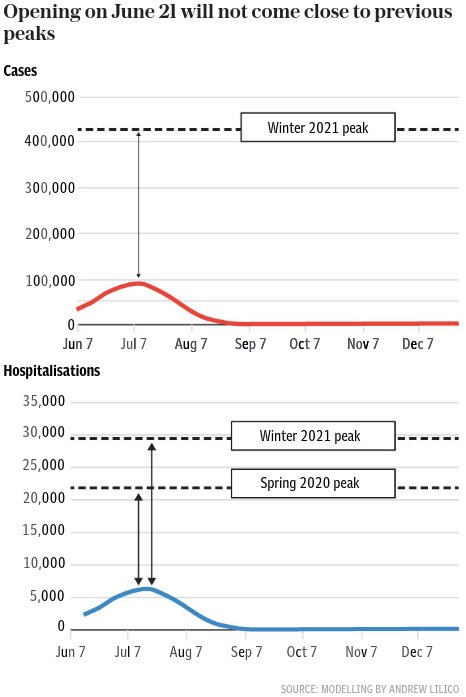
Do we risk swamping the NHS with Covid-19 cases if the government proceeds with Step 4 on time on June 21st? In the Spring of 2020, there were about 22,000 Covid cases per week admitted to hospital, at the peak.
In January 2021 there were about 29,500 at that peak.
Neither of those occasions produced any British equivalent of the distressing scenes we recently saw in India where hospitals ran out of resources and turned sick people away, with relatives forced to watch their loved-ones die, untreated, in hospital car parks.
The NHS was not swamped, in that sense, on those occasions. And we should not understate how important it was that it was not.