The really concerning thing is that if all the deaths taking place during lockdown are put down as Covid-19 deaths, we are going to miss the fact that the lockdown policies have caused an increase in deaths from many other things. There has been a 50 per cent reduction in people turning up to A&E. It is clear that people just do not want to bother the doctors. And a number of these people will be dying. If we muddle the Covid-19 statistics in with the other statistics, we might think the lockdown has prevented a certain number of deaths, when it has actually caused a large number of deaths.
NHS capacity:
You hear this idea that all NHS staff have been working 20 times as hard as they have ever done. This is complete nonsense. An awful lot of people have been standing around wondering what the hell to do with themselves. A&E has never been so quiet.
The chances of children dying from COVID-19:
How many people aged 15 or under have died of Covid-19? Four. The chance of dying from a lightning strike is one in 700,000. The chance of dying of Covid-19 in that age group is one in 3.5million. And we locked them all down. Even among the 15- to 44-year-olds, the death rate is very low and the vast majority of deaths have been people who had significant underlying health conditions. We locked them down as well. We locked down the population that had virtually zero risk of getting any serious problems from the disease, and then spread it wildly among the highly vulnerable age group.
On vaccines:
It is not clear that getting the virus actually makes you immune to it in the future, and it is not clear a vaccine would either.
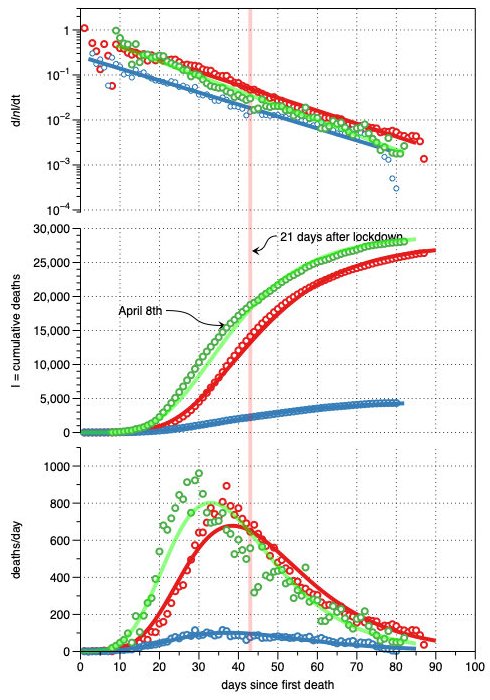
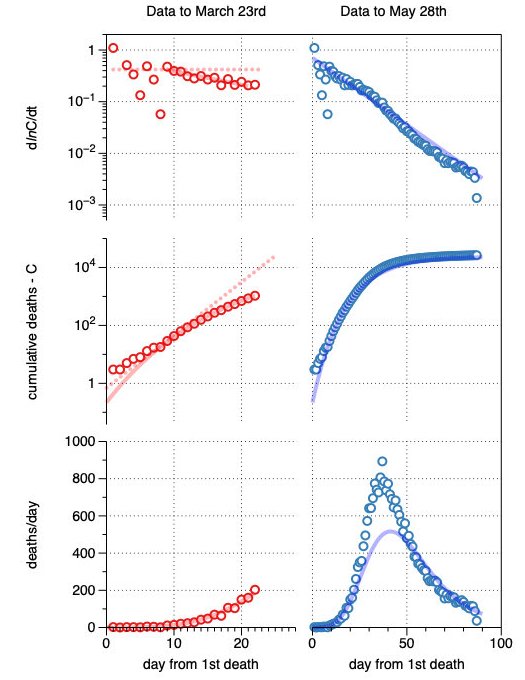
Professor Paul Dennis, a geologist and isotope geochemist at the University of East Anglia, compared the deaths in England, Sweden, Spain. He found near identical dynamics, which supports the theory that COVID-19 appears to follow the Gompertz curve in every outbreak region. This implies that social distancing and lockdown has no effect.
From January 21 through February 23, 2020, public health agencies detected 14 U.S. cases of coronavirus disease 2019 (COVID-19), all related to travel from China (1,2). The first nontravel–related U.S. case was confirmed on February 26 in a California resident who had become ill on February 13 (3). Two days later, on February 28, a second nontravel–related case was confirmed in the state of Washington (4,5). Examination of four lines of evidence provides insight into the timing of introduction and early transmission of SARS-CoV-2, the virus that causes COVID-19, into the United States before the detection of these two cases. First, syndromic surveillance based on emergency department records from counties affected early by the pandemic did not show an increase in visits for COVID-19–like illness before February 28. Second, retrospective SARS-CoV-2 testing of approximately 11,000 respiratory specimens from several U.S. locations beginning January 1 identified no positive results before February 20. Third, analysis of viral RNA sequences from early cases suggested that a single lineage of virus imported directly or indirectly from China began circulating in the United States between January 18 and February 9, followed by several SARS-CoV-2 importations from Europe. Finally, the occurrence of three cases, one in a California resident who died on February 6, a second in another resident of the same county who died February 17, and a third in an unidentified passenger or crew member aboard a Pacific cruise ship that left San Francisco on February 11, confirms cryptic circulation of the virus by early February. These data indicate that sustained, community transmission had begun before detection of the first two nontravel–related U.S. cases, likely resulting from the importation of a single lineage of virus from China in late January or early February, followed by several importations from Europe. The widespread emergence of COVID-19 throughout the United States after February highlights the importance of robust public health systems to respond rapidly to emerging infectious threats.
Prolonged periods of lockdown cocooning the public from germs could leave people dangerously vulnerable to new viruses, a leading epidemiologist has warned.
Sunetra Gupta, professor of theoretical epidemiology at the University of Oxford, fears intense social distancing could actually weaken immune systems because people are not exposed to germs and so do not develop defences that could protect them against future pandemics.
“90 percent or more of SARS-CoV-2 virus will be inactivated after being exposed [to summer sun] for 11 to 34 minutes.”
Using a model developed for estimating solar inactivation of viruses of biodefense concerns, we calculated the expected inactivation of SARS-CoV-2 virus, cause of COVID-19 pandemic, by artificial UVC and by solar ultraviolet radiation in several cities of the world during different times of the year. The UV sensitivity estimated here for SARS-CoV-2 is compared with those reported for other ssRNA viruses, including influenza A virus. The results indicate that SARS-CoV-2 aerosolized from infected patients and deposited on surfaces could remain infectious outdoors for considerable time during the winter in many temperate-zone cities, with continued risk for re-aerosolization and human infection. Conversely, the presented data indicate that SARS-CoV-2 should be inactivated relatively fast (faster than influenza A) during summer in many populous cities of the world, indicating that sunlight should have a role in the occurrence, spread rate, and duration of coronavirus pandemics.
COVID-19 started registering with most of the British public around late February and early March. Many were concerned but not particularly afraid. Only weeks later people were terrified to leave their homes or go near other human beings. How did such a dramatic shift in public perception happen so quickly?
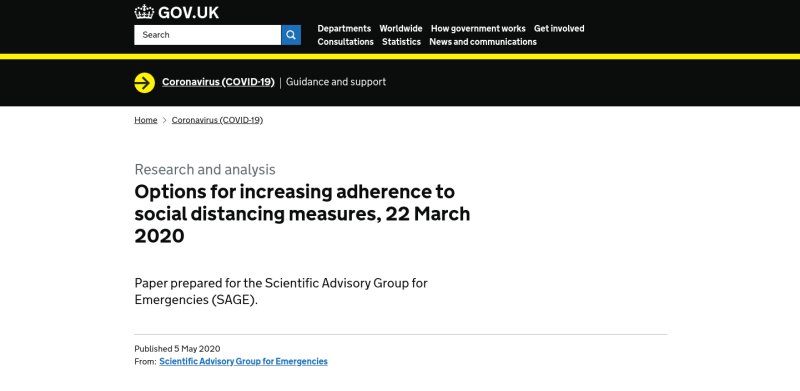
In early March 2020, The Scientific Advisory Group for Emergencies (SAGE) produced a document for the UK Government highlighting methods for rolling out new social distancing rules. There seemed to be some doubt as to whether the public would comply with the upcoming measures so SAGE outlined a methodology based on known psychological behavioural modification techniques.
SAGE, SPI-B and applied psychology
SAGE is an advisory group to the UK government responsible for making sure decision makers have access to scientific advice. We are told that the advice provided by SAGE does not represent official government policy.
SAGE also relies on expert sub-groups for COVID-19 specific advice. These sub-groups include:
NERVTAG: New and Emerging Respiratory Virus Threats Advisory Group
SPI-M: Scientific Pandemic Influenza Group on Modelling
SPI-B: Independent Scientific Pandemic Influenza Group on Behaviours
The identity of individual committee members themselves were initially kept secret, purportedly due to national security. Some names were eventually released, largely due to efforts by UK businessman Simon Dolan and his legal challenge campaign. Nevertheless, two members remain anonymous.
Psychological techniques for behavioural change
The document itself, titled Options for increasing adherence to social distancing measures, was drafted by SPI-B, the behavioural science sub-group for SAGE.
SPI-B highlighted nine broad ways of achieving behavioural change in the public:
Education
Persuasion
Incentivisation
Coercion
Enablement
Training
Restriction
Environmental restructuring
Modelling
In the document, SPI-B focused on the methods most relevant to their stated goals and set out ten options that were evaluated on six criteria.
A key part of SPI-B’s behavioural change strategy that seems to have been adopted was to ‘persuade through fear.’ The Persuasion section of the document states:
A substantial number of people still do not feel sufficiently personally threatened.
Clearly, the psychologists felt that, as of late March, the public was still not afraid of COVID-19. It therefore suggested that the government increase the level of fear:
The perceived level of personal threat needs to be increased among those who are complacent, using hard-hitting emotional messaging.
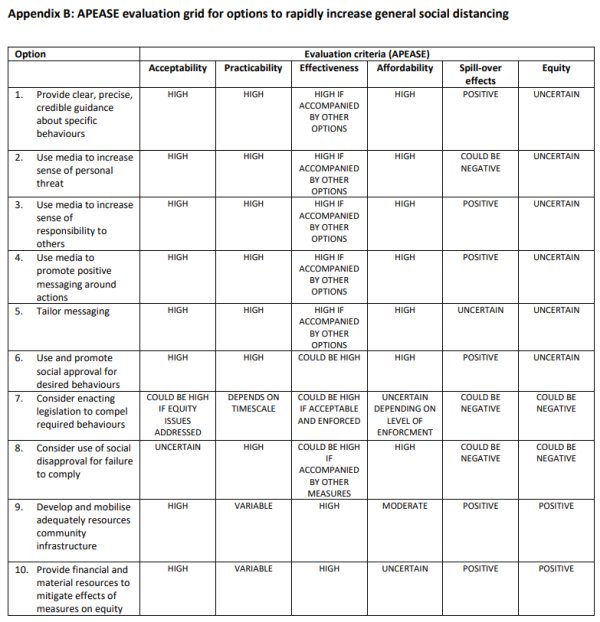
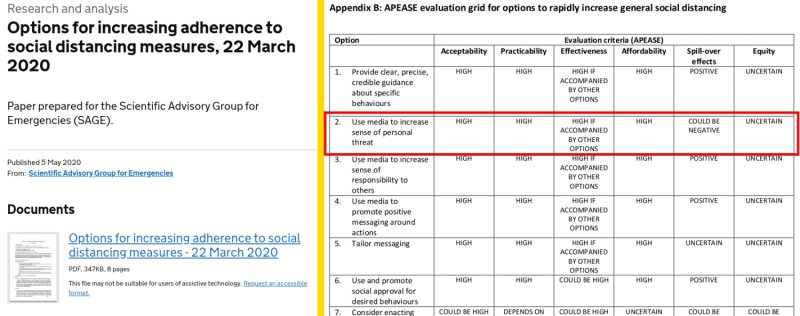
Appendix B of the document lists ten options that can be used to increase social distancing in the public. Option 2 advises:
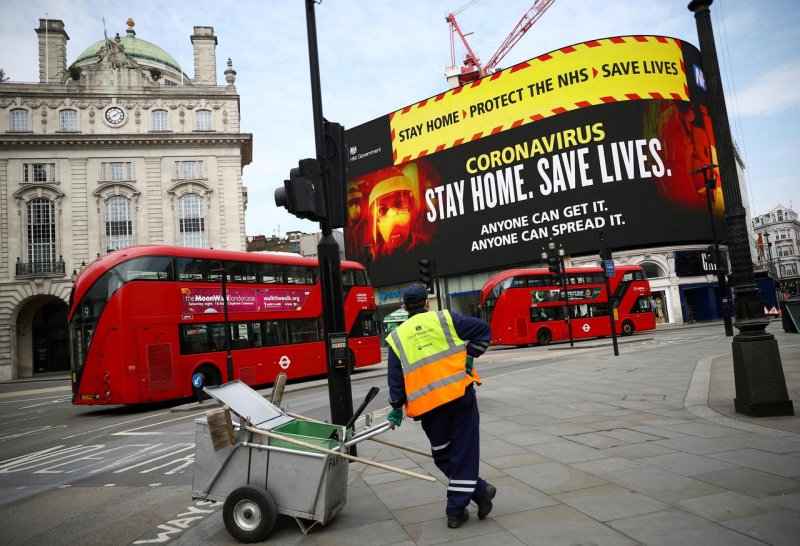
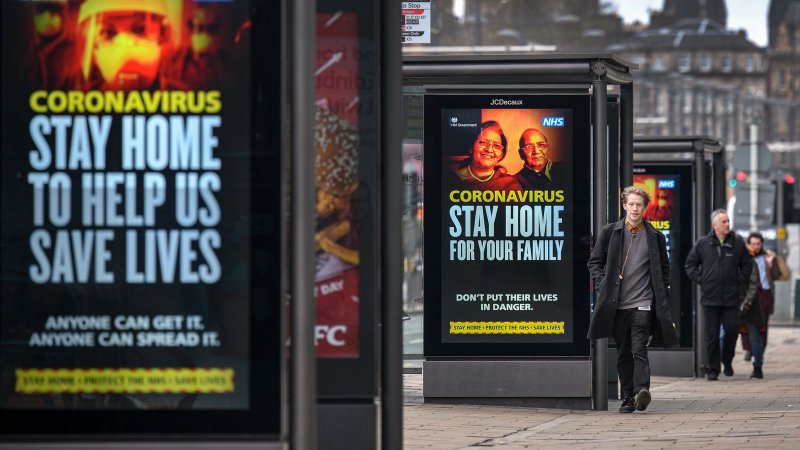
In hindsight, this explains the tone of government sponsored social media and physical billboard advertising campaigns that started appearing around April.
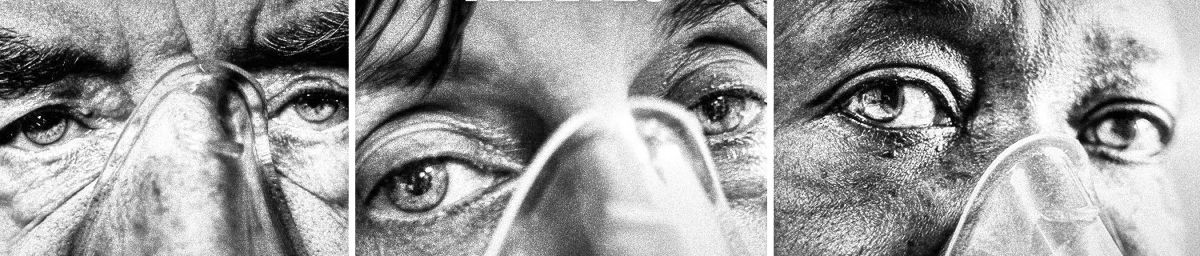
SPI-B recommendations to increase personal threat and use hard-hitting emotional messaging are on display with eerie imagery coupled with taglines such as:
“Anyone can get it. Anyone can spread it.“
“Don’t put your friends and family in danger.“
“Stay home for your family. Don’t put their lives in danger.“
“If you go out, you can spread it. People will die.“
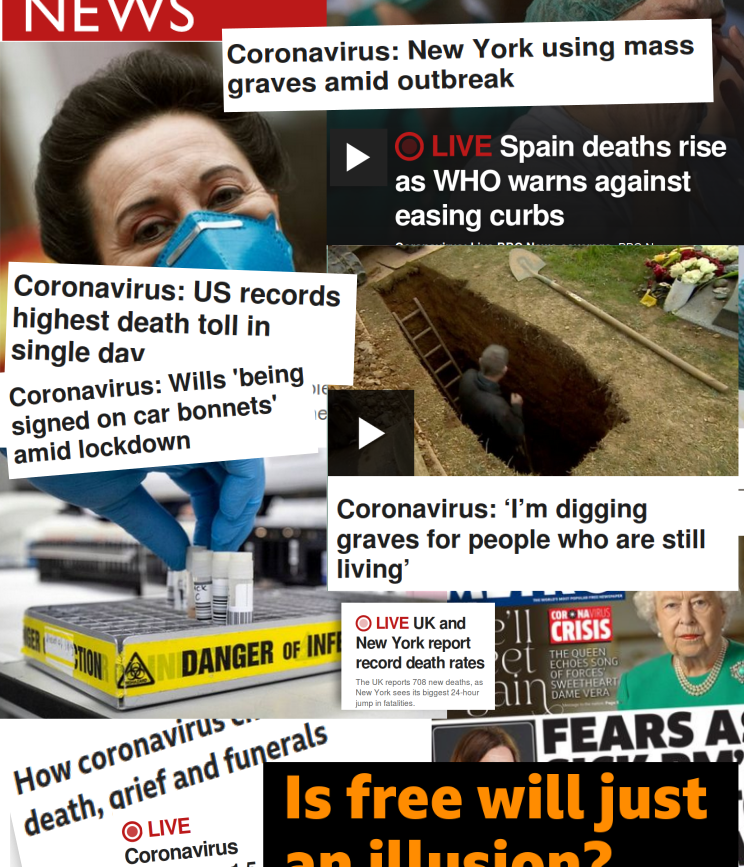
Source: BBC headlines in April 2020 compiled by InProportion2
The article compared hysterical BBC news headline from the first week of April 2020 with those from 2018, when mortality rates were peaking due to a bad flu season. It found no references to flu or excess mortality on the BBC home page during the 2018 peak. InProportion2 asked, “Do the headlines reflect the gravity of the situations in an equivalent way – or is additional fear being stirred up in 2020?“
Persuasion through shame and approval: Covidiots and heroes
SPI-B psychologists knew that fear on its own would not persuade everyone. Messaging needed to be tailored to take into account different ‘motivational levers.’
Some people will be more persuaded by appeals to play by the rules, some by duty to the community, and some to personal risk.
It therefore suggested using both social approval and disapproval, with compulsion (legislation) as a backup:
Option 6: Use and promote social approval for desired behaviours
Option 7: Consider enacting legislation to compel required behaviours
Option 8: Consider use of social disapproval for failure to comply
We can see the obvious approval-disapproval dialectic with the ‘Heroes and Covidiots’ narrative that soon began to surface in the news. The term ‘Covidiot’ appeared around March with The Economist’s 1843 Magazinedescribing covidiots in this way:
Even in a pandemic, many of us are prone to judge others and find them wanting: the term “covidiot” describes any and every person behaving stupidly or irresponsibly as the epidemic spreads. Sometime in early March the word was born, and, almost as fast as the virus spread, so did instances of covidiotic behaviour.
Although it’s not clear how the term came about, it was quickly adopted in UK mainstream and social media. At the same time, we began seeing praise for heroes who ‘did the right thing’ by complying with the government measures.
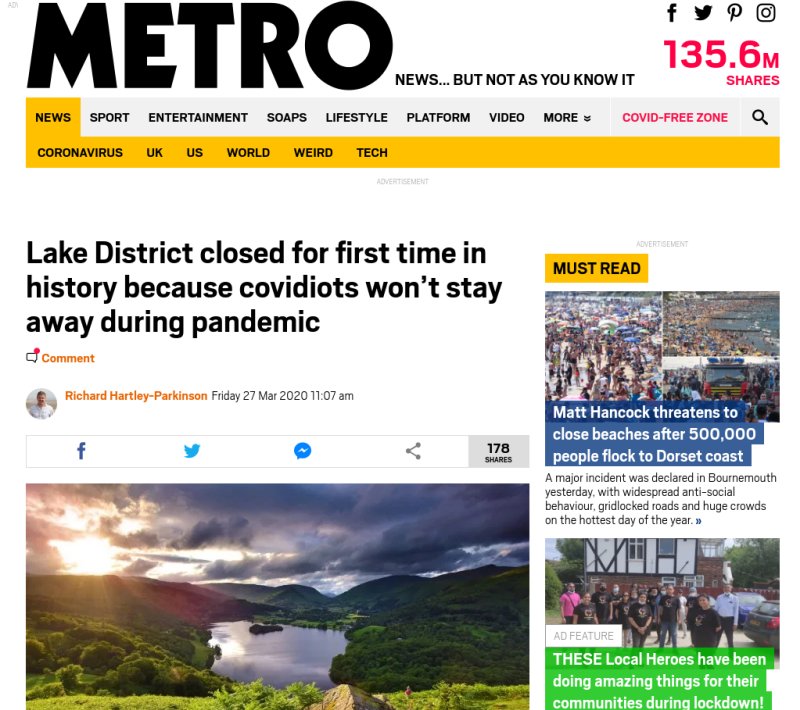
The METRO article below shows all three options in play:
Social approval: “These local heroes have been doing amazing things…”
Social disapproval:“Lake District closed…because covidiots won’t stay away…”
Compulsion: “Matt Hancock threatens to close beaches…”
These psychological techniques would have been impossible to deploy on the public without a compliant media. How did the government convince the media to go along with the plan?
…the government is spending more than usual, judging by their bookings. The publishers also pointed out that the lack of activity from other advertisers in the current market means the government campaigns will have an outweighed share of voice compared with normal times.
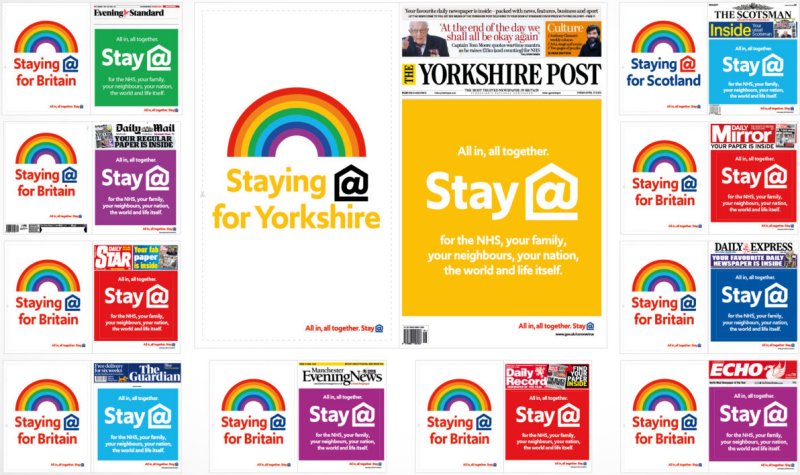
During that period, the British public started seeing coverage across media outlets with the unified “In this together” messaging. O’Reilly pointed out that the campaign was worth £35 million over a three month period.
Last week, the government and newspaper industry launched a three-month advertising partnership dubbed “All in, all together.” The campaign — worth approximately £35 million ($44 million) for the full course, according to sources — kicked off on Apr. 17, with all the U.K.’s national and regional daily news brands running near-identical cover wraps and homepage takeovers, which carried the copy, “Stay at home for the NHS, your family, your neighbours, your nation the world and life itself.”
So, we ask again: how did the government convince the media to go along with the plan? The answer is simple and obvious: with lots of money.
Psychological techniques to change behaviour
We can see that the UK Government has a public document outlining psychological techniques to change the behaviour of the population. We see a unified mass-media campaign that falls in line with these techniques. We then see a dramatic shift in public perception and behaviour.
What else can we call this but ‘brainwashing’?
Despite the open nature of what has transpired, it seems to have gained little coverage in the media. This is of no surprise since it was clearly complicit in spreading fear in the public.
Campaign, the world’s leading business media brand for the marketing and advertising, reported that the UK government spent more than £184m on Covid communications in 2020.
It has emerged that German politicians, scientists and public health bureaucrats have also collaborated to induce panic to justify the first German lockdown. The source material is in German but a Twitter thread explaining the leaks in English has been archived. We will update here if an English source becomes available.
On 18 March, the UK Government put out a tender for a £2m COVID Public Information Campaign for Northern Ireland. It is to last to years starting 1 April 2021.
Researcher Ian Davis reports about the ties between the UK Government and Omnicom, the New York-based corporate communications company the behind the phrases “flatten the curve”, “stay home, protect the NHS, save lives”, “rule of six” and “look into my eyes” campaigns. The UK Government has awarded Omnicom with £1.6 billion in media buy-in contracts since 2018.
The Recovery trial has steadfastly ignored Professor Didier Raoult and a string of countries that have implemented his protocol, early use of HCQ with Azythromycin in safe doses, despite the fact that, after treating 3,737 patients — the single largest study in the world —Raoult has lost only 0.6 per cent, while Horby and Landray are presiding over carnage —a fatality rate of 25 per cent.
The Recovery trial has steadfastly ignored Professor Didier Raoult in the early use of HCQ with Azythromycin in safe doses.
Raoult has lost only 0.6 per cent, while Horby and Landray are presiding over carnage —a fatality rate of 25 per cent.
Landray admitted to an investigative journalist at FranceSoir ‘these are quite high doses to… have a chance of killing the virus.’ Or killing the patient.
Recovery is not the only trial delivering dangerously elevated doses of HCQ to Covid patients. Dosage in the international Solidarity trial was four times greater than the dose being used in India.
WHO has been working for years with Gilead Sciences trying to get the pharmaceutical company’s lacklustre drug Remdesivir to show efficacy at curing first Ebola, with poor results, and now Covid-19.
Landray revealed Gilead pays scientists 20 to 50 times more to conduct a clinical trial than Horby and Landray were paid to conduct the Recovery trial.
Horby is the executive director of the International Severe Acute Respiratory and Emerging Infection Consortium which received 4.5 million pounds for research into vaccines.
Horby established the Epidemic Research Group which is promised up to 14 million pounds from AstraZeneca and Zuckerberg/Chan of Facebook fame for the development of a Covid-19 vaccine which is being trialled by Oxford University.
AstraZeneca is interested in merging with Gilead Sciences, which, if it went through, would create the biggest Big Pharma ever.
Horby and Landray have announced that dexamethasone, a low-cost steroid which is also being tested has reduced the mortality rate of Covid-19 patients on ventilators from a scandalous 41 per cent to a still appalling 32 per cent.
Raoult has pointed out that in his hospital, of the 0.6 per cent who die, a mere 16 per cent were in ICU
In Britain, where almost 42,000 people have died of Covid, the only thing randomised, controlled trials have achieved, is to blind people to the evidence that 40,000 of those deaths could have been avoided.
Government figures have revealed that lack of money forced millions of people to go hungry or rely on food banks during the first few weeks of the coronavirus lockdown, with families and young adults worst affected.
Households with children, people with health issues and people aged 16-24 were most likely to either to skip meals or use food charities to feed themselves or their family in April and May, the Food Standards Agency (FSA) data showed.
COVID-19 appears to follow the Gompertz curve in every outbreak region. This means that government interventions do nothing to stop the virus.
We demonstrate that universal scaling behavior is observed in the current coronavirus (COVID-19) spread in various countries. We analyze the numbers of infected people in selected eleven countries (Japan, USA, Russia, Brazil, China, Italy, Indonesia, Spain,South Korea, UK, and Sweden). By using the double exponential function called the Gompertz function, fG(x)=exp(−e−x), the number of infected people is well described as N(t)=N0 fG(γ(t−t0)), where N0, γ and t0 are the final total number of infected people, the damping rate of the infection probability and the peak time of dN(t)/dt, respectively. The scaled data of infected people in most of the analyzed countries are found to collapse onto a common scaling function fG(x) with x=γ(t−t0) in the range of fG(x) ± 0.05. The recently proposed indicator so-called the K value, the increasing rate of infected people in one week, is also found to show universal behavior. The mechanism for the Gompertz function to appear is discussed from the time dependence of the produced pion numbers in nucleus-nucleus collisions, which is also found to be described by the Gompertz function.
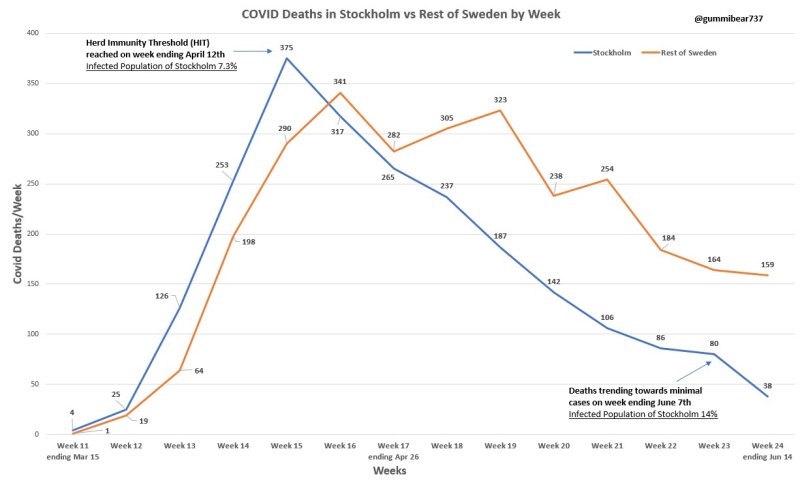
@gummibear737, a Twitter use who has been analysing COVID-19 data, has published a chart that confirms a hypothesis by Dr Michael Levitt:
Stockholm is the best population to test Covid theory whereby it was hit hard early and did not have lockdowns. Nobel Prize winner Dr Michael Levitt postulated that the virus burns out when it has infected 15-20% of the population. According to this, he’s right.
So what does this mean? Lockdowns were a waste of time and resources. Minimizing deaths just delays the inevitable. Those countries which were not hit are most likely to see continued spikes and outbreaks. Maybe less during the summer but a second wave later this year.
Stockholm is the best population to test Covid theory whereby it was hit hard early and did not have lockdowns.
Nobel Prize winner Dr Michael Levitt postulated that the virus burns out when it has infected 15-20% of the population.
In early March 2020, The Scientific Advisory Group for Emergencies (SAGE) produced a document for the UK Government highlighting recommendations for increasing adherence to social distancing measures. There seemed to be some doubt as to whether the public would comply with the upcoming measures so SAGE developed a methodology based on criteria called ‘APEASE’.
The document itself was drafted by SPI-B, the behavioural science sub-group for SAGE. More information about SPI-B can be found in this document.
In the document, behavioural change options were set in a grid and evaluated based on the six criteria. See Appendix B in the linked document.
SPI-B’s APEASE criteria are:
Acceptability
Practicability
Effectiveness
Affordability
Spill-over effects
Equity
Persuasion through fear
It seems that a big part of SPI-B’s behavioural change strategy was to ‘persuade through fear.’ The Persuasion section of the document states:
The perceived level of personal threat needs to be increased among those who are complacent, using hard-hitting emotional messaging. To be effective this must also empower people by making clear the actions they can take to reduce the threat.
Appendix B of the document lists ten options that can be used to increase social distancing in the public. Option 2 advises: “Use media to increase sense of personal threat.“
Psychological techniques to change behaviour
In this document, the UK Government has openly admitted to using psychological techniques to change the behaviour of the British population. Despite the open nature of this admission, it seems to have gained little coverage in the media.
This is of no surprise since the British media was clearly complicit in spreading fear in the public.
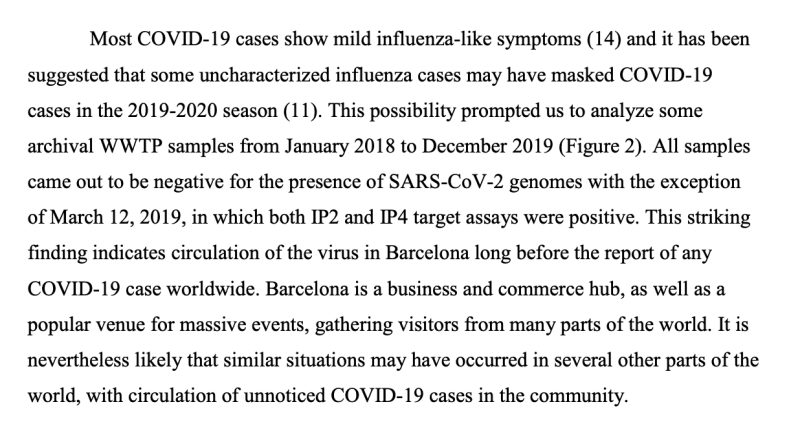
SARS-CoV-2 was detected in Barcelona sewage long before the declaration of the first COVID-19 case, indicating that the infection was present in the population before the first imported case was reported. Sentinel surveillance of SARS-CoV-2 in wastewater would enable adoption of immediate measures in the event of future COVID-19 waves.
The Gompertz function describes global dynamics of many natural processes including growth of normal and malignant tissues. On one hand, the Gompertz function defines a fractal. The fractal structure of time-space is a prerequisite condition for the coupling and Gompertzian growth. On the other hand, the Gompertz function is a probability function. Its derivative is a probability density function. Gompertzian dynamics emerges as a result of the co-existence of at least two antagonistic processes with the complex coupling of their probabilities. This dynamics implicates a coupling between time and space through a linear function of their logarithms. The spatial fractal dimension is a function of both scalar time and the temporal fractal dimension. The Gompertz function reflects the equilibrium between regular states with predictable dynamics and chaotic states with unpredictable dynamics; a fact important for cancer chemoprevention. We conclude that the fractal-stochastic dualism is a universal natural law of biological complexity.
The difference between what the government was telling us and what their information was telling us was so extreme and outrageous.
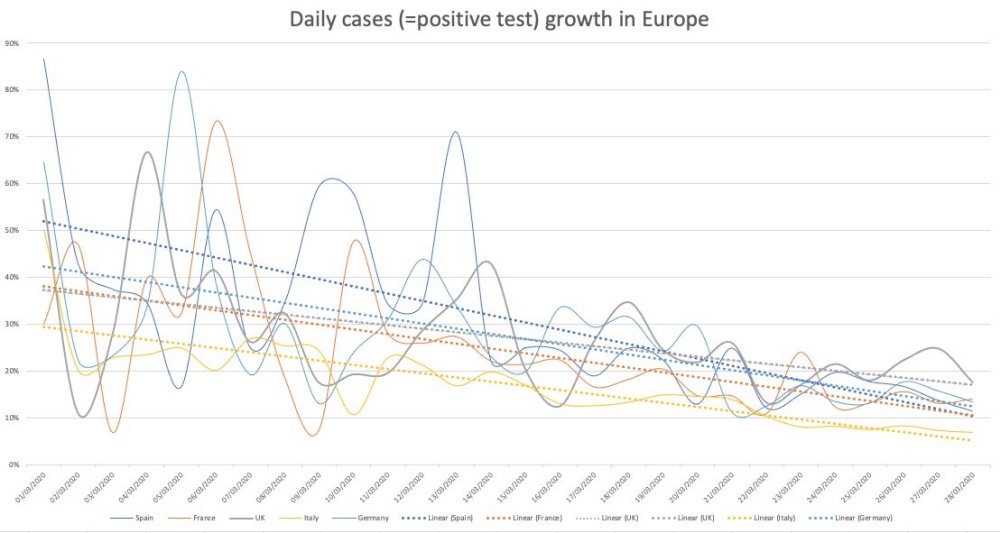
Exponential means a “constant rate of growth.” The government data in March was clearly showing that the COVID-19 was declining, not growing exponentially. This was the same in all countries you could see the data. [See chart 1]
A constantly declining growth rate will make a bell curve. The government were standing in front of bell curve graphs during their briefings yet they were telling us we were in the middle of the epidemic.
It was very clear that we were heading to a peak sometime around early to mid-April.
You don’t have to be complicated mathematics to see that COVID-19 was running out of steam almost from day one.
The conclusion from the Centre for Evidence-Based Medicine seems to be that it’s impossible to predict if there will be a second wave.
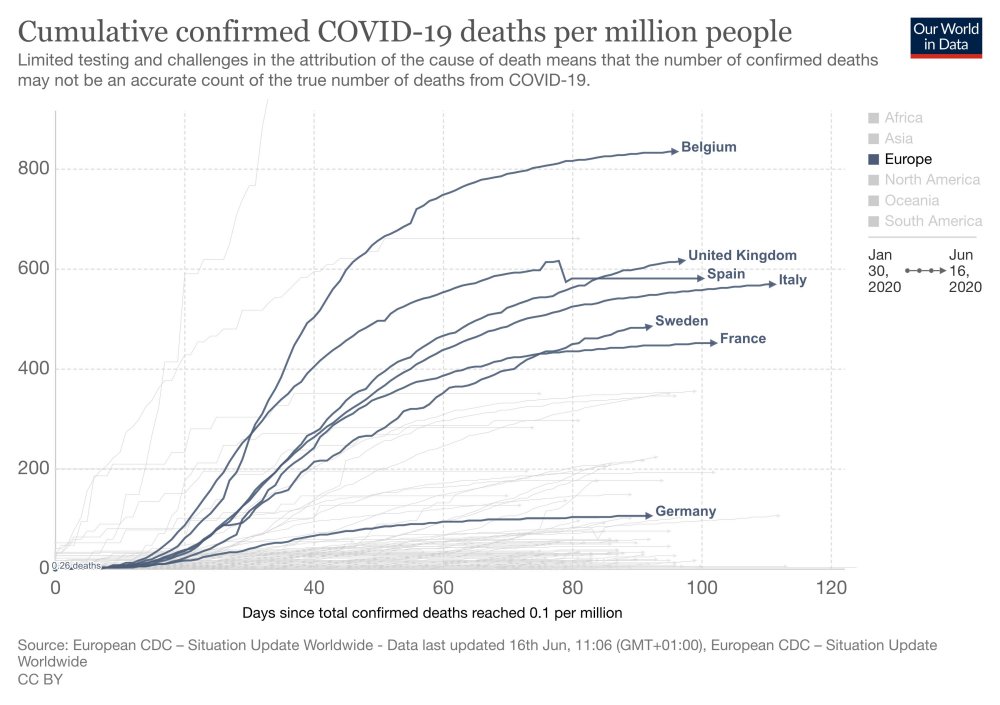
Sweden’s epidemic looks identical to the UK’s but they did not lockdown. Their datapoint indicates there won’t be a second wave. There has been no spike in Denmark either. [See chart 2]
Unknowns: has summer affected COVID-19 and will there be a mutation?
Will illnesses during the autumn and winter be mis-attributed to COVID-19? Poor media coverage means that we can’t be sure.
Symptoms of COVID-19 are very similar to the flu. Something could look like a second wave but will we really know?
The lockdown is costing a Brexit bill a week.
The government response seems to have been skewed by Neil Ferguson’s modelling data. The make-up of government advisors seems to be a recipe for groupthink, which is very dangerous.
Epidemiology (the way a disease spreads through the population) is not complicated science. The government could have had lots of people who were very good at this but they didn’t.
We should have cocooned the vulnerable, make sure the NHS has capacity and “let it rip” through the population.
We should never have had an open-ended lockdown.
The ‘R number’ is just the difference of in the number of people infected after each generation of a disease. Britain crossed the ‘magical R of 1’ line a few days before lockdown and the same day as Sweden. Whatever interventions have been done doesn’t seem to have had any effect. [See chart 3]
COVID-19 is mostly a care home and hospital disease. This was obvious very early on. Old people should not have been moved from hospitals into care homes. It seems as if we knowingly seeded the most vulnerable environment with the disease.
37% of our deaths are care home residents but they are only 0.5% of our population. Of them are dementia sufferers.
Over 20% of the infections were picked up in the hospitals. COVID-19 seems more like MRSA than influenza in that it’s an infection control problem.
COVID-19 is much more comparable to flu for the rest of the population.
1968 flu killed 80,000 people in the UK.
This last winter was a low flu winter. It’s quite possible that the people who died of COVID-19 are those who didn’t die.
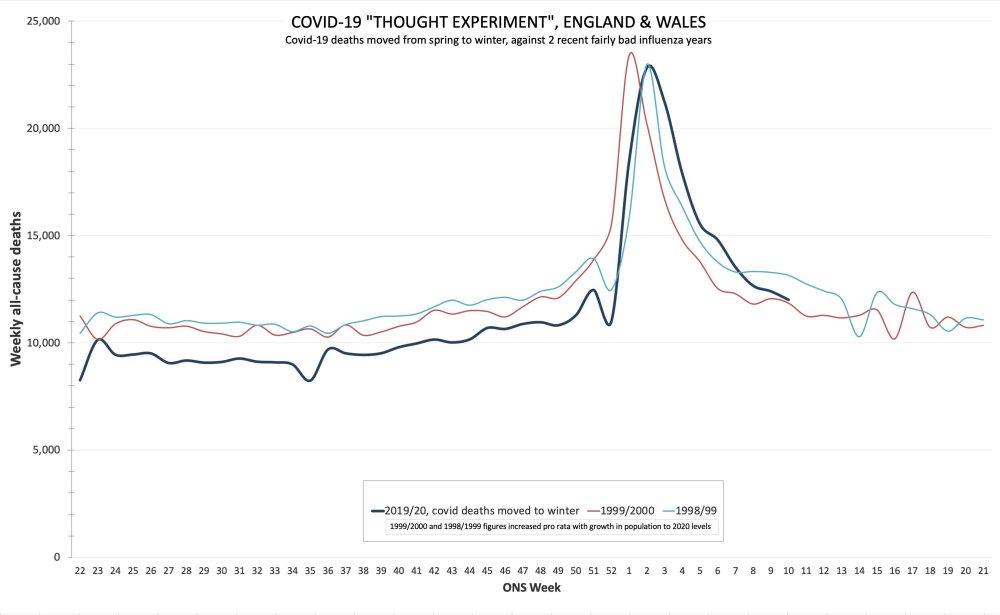
If you overlay COVID-19 deaths with the 2000 flu season, they look very similar. [See chart 4]
95% of deaths have had another serious disease. Most people have almost no chance of dying from COVID-19.
If you are under 40, you have more chance of being struck by lightning that dying of COVID-19.
If you are under 60, you have more chance of drowning.
At any age, you have more chance of dying on the roads than dying of COVID-19.
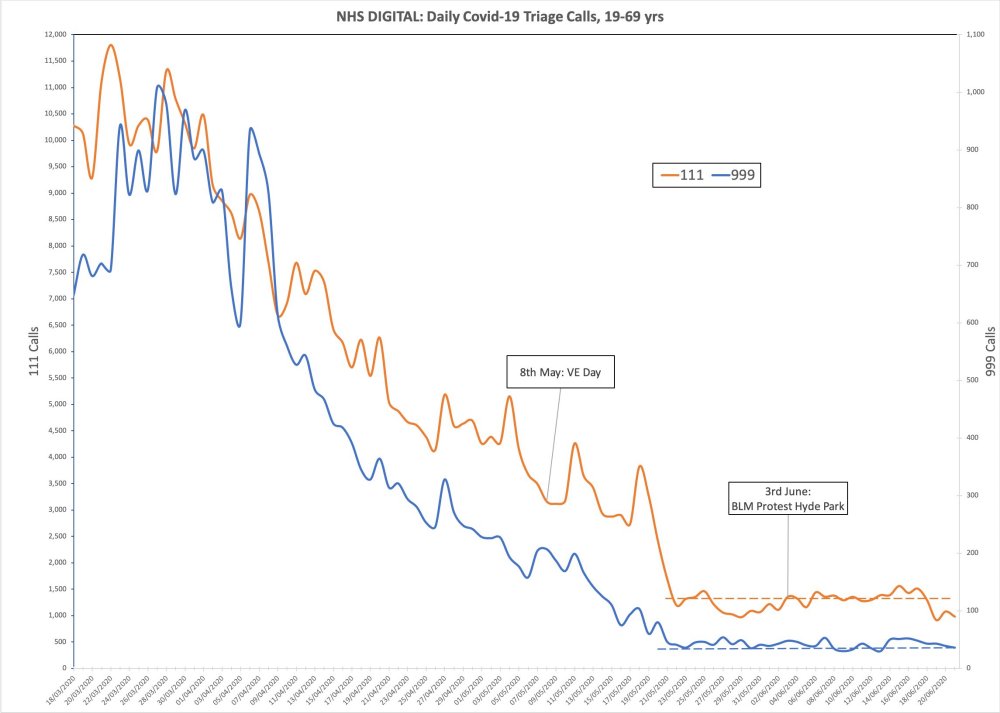
Lead indicators of 111 and 999 calls with COVID-19 symptoms show there was no spike after VE Day celebrations or BLM protests. In fact, it was even coming down at lockdown. That lockdown was big change for COVID-19 is invisible in the data. [See chart 5]
Charts
Chart 1: COVID-19 was declining in Europe as of march. It was not growing exponentially
Chart 2: Sweden’s epidemic looks similar to the UK’s but they did not lock down.
Sweden has had fewer covid deaths per capita than Belgium, Spain, Italy or the UK, and its children <16 have missed no school. @AlistairHaimes, 17 June 2020
Chart 3: Britain crossed the ‘magical R of 1’ line a few days before lockdown
UK Rt (“R number”), late Feb to early April. Lockdown did the square root of nothing. Hand-washing advice early March does look to have caused a massive drop in R, as you’d expect. @AlistairHaimes, 5 May 2020
Chart 4: COVID-19 deaths overlayed with the 2000 flu season
If covid deaths had happened in winter rather than spring. Shown against two recent moderately bad influenza years, for comparison. @AlistairHaimes, 23 June 2020
Far from following the science, the government turned its back on all available data.
Until mid-April, with the escalating deaths in care homes agonisingly clear across Europe, government policy was still for patients to be discharged to care homes from hospitals without requiring negative tests. And so the toll: around half of UK Covid-19 deaths are care home residents, despite them accounting for only 0.6 per cent of our population.
Germany, whose population is roughly 25 per cent bigger than ours, has suffered approximately a quarter of our Covid deaths.
Ministers have deferred to scientists who themselves deferred to the projections of models, even when data on the ground told a completely different story.
Statisticians on social media had a field day pointing out the chasm between modelled outcomes and reality, but it is not clear that the models on which SAGE relied (both their input parameters and mechanical dynamics) were continually refined with on-the-ground data (or simply discarded as wrong).
Why weren’t Oxford’s team, who specialise in zoonotic viruses and who looked at the same data as Neil Ferguson’s modelling-led team but came to wildly different conclusions, on SAGE’s panel to provide an alternative view?
Why were there no economists on SAGE? Economics is not the bloodless pursuit of money but the science of decision-making under uncertainty where resources are finite; could they really have brought nothing to the party?
In mid-March, Stanford’s Nobel laureate Michael Levitt (biophysicist and professor of structural biology) discussed the “natural experiment” of the Diamond Princess cruise ship, a petridish disproportionately filled with the most susceptible age and health groups. Even here, despite the virus spreading uncontrolled onboard for at least two weeks, infection only reached a minority of passengers and crew.
The data towards the end of March clearly showed we were already near the tipping point of the bell-curve (meaning the disease is on the wane). We were already past the point where lockdown could have made much difference.
Knut Wittkowski: “respiratory diseases [including Covid-19] . . . remain only about two months in any given population”.
People under 50 are more likely to die suddenly because of an accident or injury than from coronavirus, a leading risk expert has said. Professor Sir David Spiegelhalter said people under 25 are more likely to die from flu or pneumonia, while under 40s have a greater risk of being killed in a road accident. The Cambridge University professor looked at the average risk for different age groups dying after contracting Covid-19 and compared it with the most recent yearly data from 2018.
It’s becoming clear that the social distancing rules – even if the new one-metre rule – are unnecessary.
Across the United Kingdom, epidemiologists, public health officials and local bureaucrats are stamping their feet and gnashing their teeth. They’re furious about the fact that daily deaths from Covid-19 are continuing to decline at a precipitous rate. Contrary to their dire warnings, the easing of lockdown restrictions hasn’t led to an uptick in the rate of infection. The much ballyhooed ‘second spike’ has refused to materialise. The virus has all but disappeared.
The extent to which Covid-19 has vanished isn’t immediately apparent from the figures. The death tolls announced each day refer to all those deaths involving coronavirus that have been ‘registered’ in the last 24 hours. That includes people who died weeks ago – sometimes months ago – but whose paperwork has only just been completed. If you look instead at the number of actual deaths in English hospitals in the last 24 hours, that gives a clearer picture. The number on June 23 was four – all in the north west. Fewer than 20 died in London hospitals in the past week.
Working safely during COVID-19 in offices and contact centres, published 24 June 2020, states:
6. Personal Protective Equipment (PPE) and face coverings Unless you are in a situation where the risk of COVID-19 transmission is very high, your risk assessment should reflect the fact that the role of PPE in providing additional protection is extremely limited.
6.1 Face coverings There are some circumstances when wearing a face covering may be marginally beneficial as a precautionary measure. The evidence suggests that wearing a face covering does not protect you, but it may protect others if you are infected but have not developed symptoms.
It is important to know that the evidence of the benefit of using a face covering to protect others is weak and the effect is likely to be small…
(Emphasis mine)
Screenshot from HM Government publication Working safely during COVID-19 in offices and contact centres, published 24 June 2020.
Anders Tegnell, Sweden’s state epidemiologist, said he advised against such restrictions on movement because of the detrimental side effects they often entail.
“It was as if the world had gone mad, and everything we had discussed was forgotten,” Tegnell said in a podcast with Swedish Radio on Wednesday. “The cases became too many and the political pressure got too strong. And then Sweden stood there rather alone.”
Traffic log cookies are used to measure site traffic. We'll assume you're ok with this, but you can opt-out if you wish. Cookie settingsACCEPT
Privacy & Cookies Policy
Privacy Overview
This website uses cookies to improve your experience while you navigate through the website. Out of these cookies, the cookies that are categorized as necessary are stored on your browser as they are essential for the working of basic functionalities of the website. We also use third-party cookies that help us analyze and understand how you use this website. These cookies will be stored in your browser only with your consent. You also have the option to opt-out of these cookies. But opting out of some of these cookies may have an effect on your browsing experience.
Necessary cookies are absolutely essential for the website to function properly. This category only includes cookies that ensures basic functionalities and security features of the website. These cookies do not store any personal information.
Any cookies that may not be particularly necessary for the website to function and is used specifically to collect user personal data via analytics, ads, other embedded contents are termed as non-necessary cookies. It is mandatory to procure user consent prior to running these cookies on your website.