The COVID-19 virus emerged in 2020 and has since spread across the globe. The ensuing crisis and varied government responses have affected how we conduct our lives, how we live in cities and how we conceptualize our world. The full repercussions of the pandemic are not yet fully known, but if resources and focus are shifted away from long-term commitments, such as the Sustainable Development Goals (SDGs), to short-term band-aids and rushed recoveries, progress made towards sustainability and equality could be threatened.
In Australia, the city of Melbourne faced unique challenges. Melbourne had more cases of COVID-19 than the rest of Australia and, consequently, was subject to one of the longest and most pervasive lockdowns in the world. While successful in combating the virus, these lockdowns have had real effects on the city, with implications for businesses, employment and the economy, mental and physical health, and general well-being. The restrictions and their aftermath have also had uneven effects within the city, disproportionately affecting the most vulnerable in society. Yet the response to the crisis has also shown us what we can do at government and community levels to support those in need.
EvidenceNotFear
Browse the articles related to this topic below.
Join our community on Guilded.
Immunocompetent staff, patients and residents who have tested positive for SARS-CoV-2 by PCR should be exempt from routine re-testing by PCR or LFD antigen tests (for example, repeated whole setting screening or screening prior to hospital discharge) within a period of 90 days from their initial illness onset or test (if asymptomatic) unless they develop new COVID-19 symptoms. This is because fragments of inactive virus can be persistently detected by PCR in respiratory tract samples following infection – long after a person has completed their isolation period and is no longer infectious.
In this article, we aim to develop a political economy of mass hysteria. Using the background of COVID-19, we study past mass hysteria. Negative information which is spread through mass media repetitively can affect public health negatively in the form of nocebo effects and mass hysteria. We argue that mass and digital media in connection with the state may have had adverse consequences during the COVID-19 crisis. The resulting collective hysteria may have contributed to policy errors by governments not in line with health recommendations. While mass hysteria can occur in societies with a minimal state, we show that there exist certain self-corrective mechanisms and limits to the harm inflicted, such as sacrosanct private property rights. However, mass hysteria can be exacerbated and self-reinforcing when the negative information comes from an authoritative source, when the media are politicized, and social networks make the negative information omnipresent. We conclude that the negative long-term effects of mass hysteria are exacerbated by the size of the state.
http://archive.today/2021.02.09-004023/https://www.mdpi.com/1660-4601/18/4/1376/htm
In these studies, both V590 and V591 were generally well tolerated, but the immune responses were inferior to those seen following natural infection and those reported for other SARS-CoV-2/COVID-19 vaccines.
The truth is that there was never a question of whether this Government would impose another lockdown on the UK in 2021. Lockdown isn’t a consequence of the failure of coronavirus-justified programmes and regulations: it’s the product of their success in implementing the UK biosecurity state. After a brief summer recess under the system of tiered restrictions, the following winter will see the lockdown of the UK imposed again under newly notifiable diseases from new viruses and new strains, new protocols for certification and new criteria for deaths, the new medical categorisation of new cases which, like the present ones, present little or no threat to public health, but which like it will be used to enforce new technologies, new programmes and new regulations. This is the ‘New Normal’ we were promised, and it’s being built on a foundation of lies, damned lies and statistics.
How important were the economic lockdowns in the spring of 2020 in curbing the COVID-19 pandemic and how important was lockdown as compared to voluntary changes in behavior? In the spring, the overall social response to the COVID-19 pandemic consisted of a mix of voluntary and government mandated behavioral changes. Voluntary behavioral changes occurred on the basis of information, such as the number of people infected and the number of COVID-19-deaths, and on the basis of the signal value associated with the official lockdown combined with appeals to the population to change its behavior. Mandated behavioral changes took place as a result of the banning of certain activities deemed non-essential. Studies which differentiate between the two types of behavioral change find that, on average, mandated behavioral changes accounts for only 9% (median: 0%) of the total effect on the growth of the pandemic stemming from behavioral changes. The remaining 91% (median: 100%) of the effect was due to voluntary behavioral changes. This is excluding the effect of curfew and facemasks, which were not employed in all countries.
Depression among pupils is at ‘frightening’ levels, paediatrcians have warned, as they urge the Government to reopen schools or risk a ‘calamitous,’ impact on children’s mental health.
Ten of the UK’s top exerts in child health say anxiety, self harma nd suicidal thoughts have reached frightening levels among children.
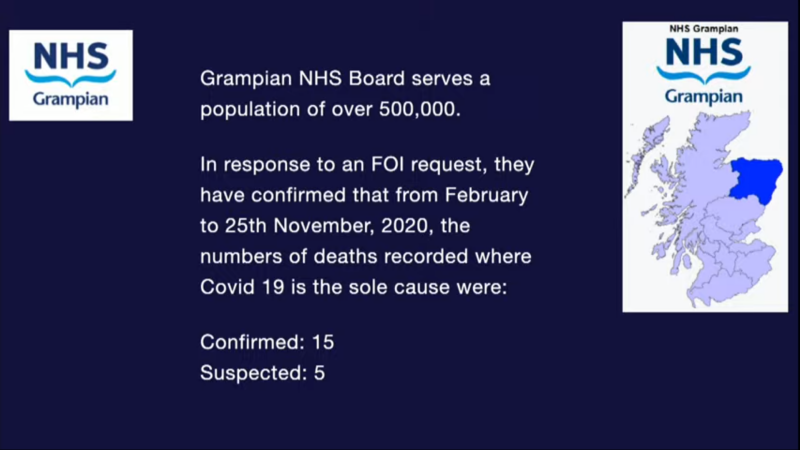
Grampian NHS Board via a Freedom of Information (FOI) request. Number of deaths between February and November 2020 where COVID-19 was the sole cause:
- 15 confirmed
- 5 suspected
A new study, involving over 25,000 school-aged children, shows that masks are harming schoolchildren physically, psychologically, and behaviorally, revealing 24 distinct health issues associated with wearing masks.
The health issues and impairments observed in this study were found to affect 68% of masked children who are forced to wear a face covering for an average of 4.5 hours per day. The study also includes 17,854 health complaints submitted by parents.
Some of the health issues found in the study include: increased headaches (53%), difficulty concentrating (50%), drowsiness or fatigue (37%), malaise (42%), and nearly a third of children experience more sleep issues than they had previously and a quarter of children developed new fears.
Though these results are concerning, the study also found that 29.7% of children experienced shortness of breath, 26.4% experienced dizziness, and hundreds of the participants experiencing accelerated respiration, tightness in chest, weakness, and short-term impairment of consciousness.
- An Oxfam report has investigated growing inequality caused by the pandemic
- The wealthiest 1,000 people recouped their losses within ten months of the virus
- But the world’s poorest could take ten years to recover from their hardship
- The top ten richest have added billions to their fortune despite the global crisis
Analysis of the age profile of Covid infections, however, does not point to schools being especially important in the early-stage growth of the second wave. Although the report does also observe that ‘school closures can contribute to a reduction in SARS-CoV-2 transmission’.
But had schools played a big role you would expect to have seen a sharp increase in cases among children of school age a week or two following the return to the classroom. Instead, the ECDC noted that Europe’s second wave began with a sharp increase in cases among 19 to 39 year olds in mid August. Cases among 16 to 18 year olds also increased around this time, but the curve of infections among younger children rose much more gradually, in step with infection rates in the over-40s.
https://www.spectator.co.uk/article/what-role-do-schools-play-in-the-spread-of-covid-19-
A group of 47 psychologists has claimed this amounts to a strategic decision “to inflate the fear levels of the British public”, which it states is “ethically murky” and has left people too afraid to leave their homes for medical appointments. Led by former NHS consultant psychologist Dr Gary Sidley, the experts have written to the British Psychological Society (BPS) claiming the strategy is “morally questionable.”
https://www.express.co.uk/news/uk/1388315/coronavirus-feat-tactics-psychology-british-public
Categories
Absolute Zero Report – UK Fires
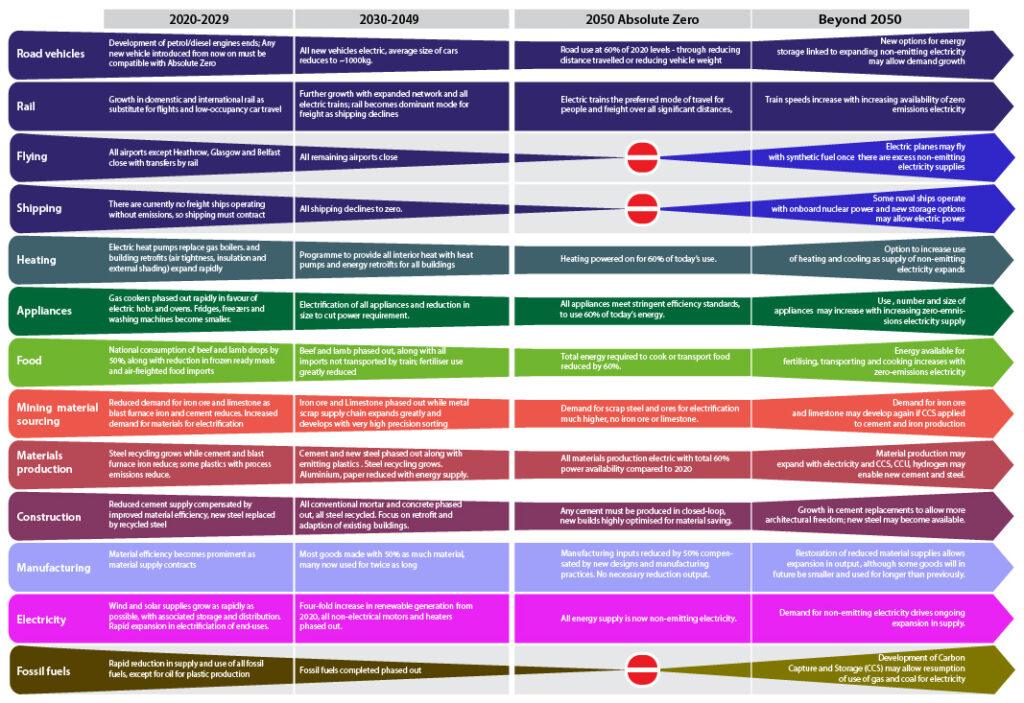
UK demand for energy-intensive materials is growing, driving increased emissions in the UK and abroad. UK FIRES is a research programme sponsored by the UK Government, aiming to support a 20% cut in the UK’s true emissions by 2050 by placing Resource E ciency at the heart of the UK’s Future Industrial Strategy.
We have to cut our greenhouse gas emissions to zero by 2050: that’s what climate scientists tell us, it’s what social protesters are asking for and it’s now the law in the UK. But we aren’t on track. For twenty years we’ve been trying to solve the problem with new or breakthrough technologies that supply energy and allow industry to keep growing, so we don’t have to change our lifestyles. But although some exciting new technology options are being developed, it will take a long time to deploy them, and they won’t be operating at scale within thirty years.
https://www.repository.cam.ac.uk/bitstream/handle/1810/299414/REP_Absolute_Zero_V3_20200505.pdf
The return to school of children around mid-August 2020 coincided with a general relaxation of other NPI measures in many countries and does not appear to have been a driving force in the upsurge in cases observed in many EU Member States from October 2020.
https://www.ecdc.europa.eu/en/publications-data/children-and-school-settings-covid-19-transmission
The low seroprevalence of SARS-CoV-2 antibodies in young children in this study may indicate that they do not play a key role in SARS-CoV-2 spreading during the current pandemic.
https://jamanetwork.com/journals/jamapediatrics/fullarticle/2775656
- German researchers enrolled nearly 2,500 parents and their children in a study
- Found three times as many adults had coronavirus antibodies than children
- Data also shows a previously infected adult and an uninfected child was 4.3 times more common than a previously infected child and an uninfected parent
Children are unlikely to have played a significant role in the spread of coronavirus during the first wave last year, a study shows.
Throughout the pandemic it has become increasingly evident children are less affected by Covid-19; symptoms, severe disease and death figures in children are all much lower than would be expected when compared to the rest of the population.
Figures from Public Health England (PHE) show the current risk of dying from coronavirus if infected is 1,513 per 100,000 people for over-80s, but for children aged five to nine, this is just 0.1 per 100,000.
In the UK, a Covid death is recorded if a person has died within 28 days of the first positive test.
However, what the figures do not tell us is to what extent the virus is causing the death.
In some cases, it could be a major cause. In others, it could simply be a contributory factor or perhaps just present in a person’s system when they have died of something else entirely.
Theoretically, a 90-year-old cancer patient already on palliative care could die but have coronavirus in their system at the time of death. That could be recorded as a coronavirus death.
Since inception, the program has transferred over $7.6 Billion worth of equipment (based on the items Original Acquisition Value [OAV]). In Fiscal Year 2022, $160 Million (based on OAV) worth of equipment was conditionally transferred to participating law enforcement agencies.
A Government advert that says joggers and dog-walkers are “highly likely” to have Covid is to be discontinued after the regulator said there was no evidence to support the claim.
The Telegraph can reveal that the Cabinet Office has also agreed not to repeat the claim made in the 30-second radio ad – which also warns that “people will die” if individuals “bend the rules” – after being contacted by the Advertising Standards Authority (ASA).
The taxpayer-funded advert was condemned by MPs and public health experts for spreading “false information” and risking “scaring” people into physical inactivity during the third national lockdown.
https://archive.is/3R3Ip#selection-61.1-61.115
Source URL: https://www.telegraph.co.uk/news/2021/01/21/government-discontinue-covid-ad-accusing-joggers-exercising/
So, why are the excess death data and the Covid deaths data so out of whack? And why isn’t Covid killing lots and lots of people this winter, as it did in spring? Even if you ascribe all excess deaths to Covid and none to lockdown, there really does not seem to be anything out of the normal variation in total deaths from year to year. And surely, by now, the toll of unnecessary deaths caused by untreated cancer, heart disease, depression and so on, has at least begun to register.
One reason coronavirus might not be slaying all around it this winter is because, well, this is not its first winter. Remember: it is called Covid-19, as in 2019. Of course, the official version of history states that the virus never reached Western civilisation until the spring of 2020, but evidence for this assertion is based on dodgy polymerase chain reaction (PCR) tests and a profound rejection of common sense. (By the way, how many people do you know who had a severe bout of pneumonia-like symptoms last winter?)
But the main reason for the disparity is obvious: mass PCR testing. Under the current regime (science is the wrong word), a ‘Covid death’ is someone who dies having tested positive for Covid within the previous 28 days. When you test all hospital patients, as the UK does, then some of them will turn out to be positive – how many depends largely on the way you do the tests. And the more tests you do, the more ‘Covid deaths’ you will generate. It is that simple. Dr Mike Yeadon has written extensively on this, which he calls the PCR false positive pseudo-epidemic.