COVID-19
COVID-19 is a disease defined by symptoms and is not a virus. It’s therefore not transmitted nor can you test for it using nasal or throat testing kits. SARS-CoV-2 is the coronavirus that prompted the worldwide pandemic response.
Browse the articles related to this topic below.
Join our community on Guilded.
One reason why the models failed is that they – just like most countries’ politicians – underestimated how millions of people spontaneously adapt to new circumstances. They only thought in terms of lockdowns vs business as usual, but failed to consider a third option: that people engage in social distancing voluntarily when they realise lives are at stake and when authorities recommend them to do so.
As countries plan how to leave lockdown, they can look at Sweden and ask: what happens if you don’t involve the police, if you don’t issue edicts about how many of your relatives or neighbours you can visit, and just ask people to be careful? Might that work? The Swedish experiment casts huge doubts on the models, and makes the case for trusting the public.
https://www.spectator.co.uk/article/can-we-trust-covid-modelling-more-evidence-from-sweden
- COVID-19 is about as deadly as flu, averaging between 0.1 and 0.8 per cent death rate.
- The general population under 65 with no pre-existing conditions are more likely to die in a road accident.
- Infections peaked and began to decline in many places including the UK before lockdown began
- Social distancing shows no consistent relationship to the slowdown of infections in cities around the world?
- Studies show that people confined to their homes may be as at much risk as those out and about.
- ‘R number’ rise happened in the middle of lockdown and probably linked to ongoing spreading in hospitals and care homes.
- Shutting down the world economy may result in of the order of 1,157,000 additional child deaths and 56,700 additional maternal deaths in low- and middle-income countries.
- Former Supreme Court judge Lord Sumption: “The lockdown is now all about protecting politicians’ backs. They are not wicked men, just timid ones, terrified of being blamed for deaths on their watch. But it is a wicked thing that they are doing.”
Only some of roughly 36 million jobs lost since the beginning of the lockdowns designed to protect hospitals from surging cases of COVID-19 patients are not coming back in a V-shaped or a U-shaped recover. The University of Chicago estimates that 42% of the recent layoffs will result in permanent job losses.
It remains true that deaths from Covid-19 peaked in this country on April 8, well before the shutdown could have taken effect.
Nobody has ever seen so much wild spending of non-existent money before in peacetime. Some idiots nowadays think you can do this without consequences. In wartime it was disastrous. This kind of debt really hurts.
Professor Michael Levitt, Stanford Prof. of Biophysics, Cambridge PhD and DSc, 2013 Chemistry Nobel Laureate (complex systems), says that Europe’s COVID19 Excess Deaths plateau at 153,006, 15% more than 17/18 Flu with same age range counts.
- Keeping R below one is not the only way to map a route out of lockdown.
- R is an artificial construct and not even a number we know with any certainty.
- R is calculated using mathematical models which have repeatedly been found to reach wrong-headed conclusions.
- R is not a strong enough number to bear the burden of any Government policy.
- Epidemiology models share the same serious problem as meteorology because of weak data.
- Lack of testing means we don’t know how many people have been infected, or have recovered.
- Changes to death certification during this epidemic mean that we genuinely don’t even know how many people have died as a direct result of COVID-19.
- It is becoming increasingly clear that assumptions central to the models that generate R are flawed.
- Worries that R was apparently heading back towards one were missing the point. For some segments of society, including most people of working age, that would be a good thing.
- Another implication of seeing R this way, which is quite a relief, is that social distancing can be consigned to the dustbin of bizarre historical episodes.
- R is calculated in ways that the Government can produce at will to justify a policy that is no longer tenable.
This level of social distancing cannot go on indefinitely. It will break down, more than it already has. As much as people tell the pollsters that, if anything, the current regime is too soft-touch, many are already bending if not breaking the rules on meeting friends and family, weighing the risks, being careful, and deciding for themselves. And it’s not just among the supposedly selfish young, either. Older people want to see their kids and grandkids and to make the most of the time they have left.
https://www.spiked-online.com/2020/05/17/social-distancing-corrodes-society/
Most people have accepted a temporary period of ’social distancing’ to contain the spread of COVID-19, but it seems that some in authority, like UK Home Secretary Priti Patel, would like to see us keep our distance from each other indefinitely. We must never let this happen because if we do, humanity is dead.
A rise in the Covid-19 infection rate actually means that lockdown is working
People with no history of mental illness are developing serious psychological problems for the first time as a result of the lockdown, amid growing stresses over isolation, job insecurity, relationship breakdown and bereavement, the Royal College of Psychiatrists has disclosed.
What is unique about this pandemic–apart from the fact that it’s rather small–is that the damage that it does is self-inflicted.
This is a very odd plague. It’s rather small in scale but it’s gigantic in consequences because we have chosen to inflict a form of economic suicide on ourselves.
This week on “So What You’re Saying Is…”: Dr. David Starkey argues that a calamitous series of events and decisions caused a panicked British government to recklessly abandon its sensible coronavirus plan for one that is likely to harm the nation far more than the virus itself.
Comparing this virus with historical pandemics Starkey believes the dire situation we are encountering today has a different cause. Earlier pandemics such as the Black Death eradicated up to half of the population of Europe. In contrast, although it is profoundly tragic on a personal level to the individuals and familiies it afflicts, coronavirus is nowhere near as devastating on a population-wide level as previous pandemics. Consequently, Starkey argues, the Conservative government was correct to follow a similar path to Sweden which was far more relaxed than elsewhere in Europe.
This approach suited Prime Minister Boris Johnson’s libertarian attitude and personality. But on a single weekend there was a calamitous confluence of events and decisions that caused the Tory government to panic (Northwick Park hospital overwhelmed, Imperial College modelling showing potential 500,00 deaths etc.) and enforce an extreme lockdown without any plan to deal with the epidemic. It was simply a goal to protect the NHS.
Protect the NHS: The Tory Government, says Dr. Starkey, was desperate not to be seen as responsible or the NHS being overwhelmed. Eager to prove to the traditional Labour “Red Wall” that the Conservative Party really was their natural home, the British government prioritised the NHS’s capacity to deal with Covid-19 over everything else– but disastrously this included its treatment of cancer patients etc. A bizarre and unprecdented abandoning of the Hippocratic oath that we have not seen in other countries, argues Starkey.
When faced with danger, humans draw closer together. Social distancing thwarts this impulse. Professor Ophelia Deroy from Ludwigs-Maximilians Universitaet in Munich (LMU) and colleagues argue that this dilemma poses a greater threat to society than overtly antisocial behavior.
https://www.sciencedaily.com/releases/2020/04/200424132539.htm
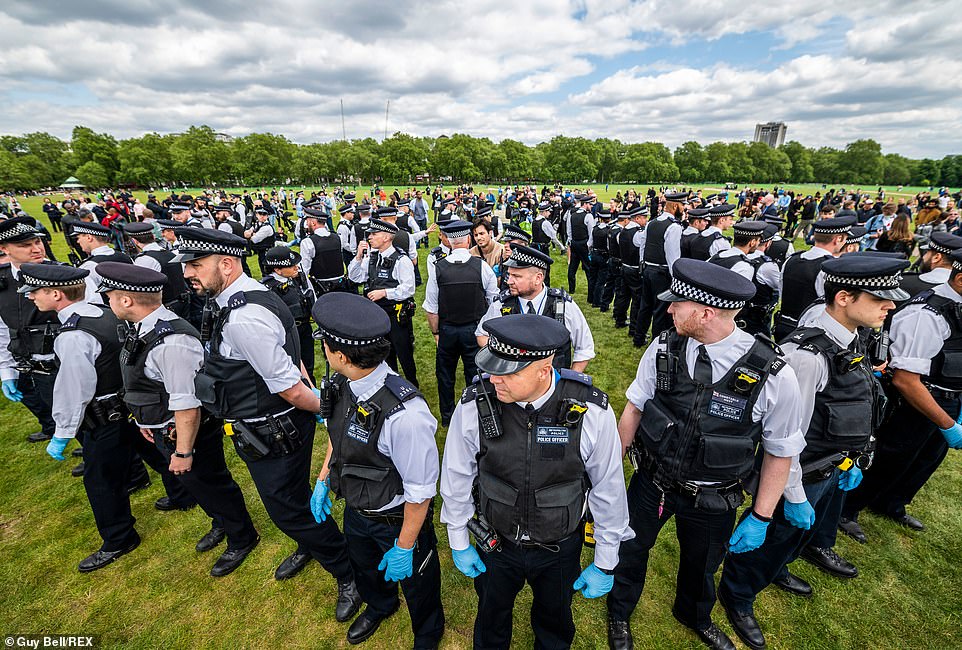
Face masks in public spaces do not provide any greater protection to the population,” Johan Carlson from the Swedish Public Health Agency Folkhälsomyndigheten said at a press conference on May 13th.
Swedish health authorities argue that keeping a distance, washing your hands, not touching your face, and staying at home if you experience any symptoms are still the best ways to halt the spread of the coronavirus. There is a concern that wearing face masks would make people follow these guidelines less strictly.
- There is a risk of a false sense of security.
- The virus can gather in the mask and when you take it off, the virus can be transferred to your hands and thereby spread further.
- Worn properly, masks might reduce the spread of infection if worn by those with asymptomatic infections, even if they might not protect the wearer themselves.
https://www.thelocal.se/20200514/explained-why-is-sweden-not-recommending-face-masks-to-the-public
Imperial College’s modelling of non-pharmaceutical interventions for Covid-19 which helped persuade the UK and other countries to bring in draconian lockdowns will supersede the failed Venus space probe and could go down in history as the most devastating software mistake of all time, in terms of economic costs and lives lost.
The argument for a lockdown was overwhelming. When Boris Johnson addressed the nation eight weeks ago, it appeared as if a killer virus was about to engulf the population at astonishing speed. You had to be mad or bad, it seemed, not to back the Prime Minister as he urged us all to stay at home, protect the NHS and save lives. The moral justification for collective action was crystal clear. “Squashing the sombrero,” as Johnson colourfully put it, was needed to buy time for the NHS to fight this thing. And we did it. Britain achieved that aim.
https://www.telegraph.co.uk/news/2020/05/16/moral-case-blanket-lockdown-fading-fast/
At a time when some advertisers are hitting pause on spending and others are avoiding appearing next to coronavirus articles — or even just “bad news” — the U.K. government is rapidly ascending the rankings of U.K. news publishers’ most important clients — and cheerleaders — during the crisis.